
LookupA searchable reference table
Freezer Storage Times Chart: Best Quality by Food
Every FoodKeeper food with a freezer entry, including those marked not recommended. Freezer times describe quality; frozen food stays safe while it stays frozen.
On this page
| Food | Freezer (quality only) | Refrigerator (safety limit) | FoodKeeper tip |
|---|---|---|---|
| Butter | 6-9 months from purchase | 1-2 months from purchase | May be left at room temperature for 1 - 2 days. |
| Buttermilk | 3 months from purchase | 1-2 weeks from purchase | – |
| Cheese, hard such as cheddar, swiss, block parmesan | 6 months from purchase | 6 months from purchase; 3-4 weeks after opening | – |
| Cheese, parmesan; shredded or grated | Not recommended | 12 months from purchase | – |
| Cheese, shredded; cheddar, mozzarella, etc. | 3-4 months from purchase | 1 month from purchase | – |
| Cheese, processed slices | Not recommended | 3-4 weeks from purchase | – |
| Cheese, soft such as brie, bel paese, goat | 6 months from purchase | 1-2 weeks from purchase | – |
| Cottage cheese | Not recommended | 2 weeks from purchase; 1 week after opening | – |
| Cream cheese | Not recommended | 2 weeks from purchase | – |
| Cream, whipping, ultrapasteurized | Not recommended | 1 month from purchase; 1 week after opening | – |
| Cream, whipped, sweetened | 1-2 months | 1 day | – |
| Cream, half and half | 4 months from purchase | 3-4 days from purchase | – |
| Cream, heavy | 3-4 months from purchase | 10 days from purchase | – |
| Cream, light | 3-4 months from purchase | 1 week from purchase | Use for cooking. |
| Dips, sour cream based | Not recommended | 2 weeks from purchase | – |
| Egg substitutes, liquid | Not recommended | 7 days from purchase; 3 days after opening | – |
| Eggnog, commercial | 6 months from purchase | 3-5 days from purchase | – |
| Eggs, in shell | Not recommended | 3-5 weeks from purchase | – |
| Eggs, raw whites, yolks | 12 months | 2-4 days | – |
| Eggs, hard boiled cooked | Not recommended | 1 week | – |
| Egg dishes | 2-3 months | 3-4 days | Freezing guidance applies to egg dishes after baking. |
| Kefir, fermented milk | Not recommended | 1 week from purchase; 1-2 days after opening | – |
| Margarine | 12 months from purchase | 6 months from purchase | – |
| Milk, plain or flavored | 3 months from purchase | Until the package use-by date | – |
| Pudding | Not recommended | Until the package use-by date; 2 days after opening | – |
| Sour cream | Not recommended | Until the package use-by date | – |
| Whipped cream, aerosol can | Not recommended | 3-4 weeks from purchase | – |
| Whipped topping, aerosol can | Not recommended | 3 months from purchase | – |
| Whipped topping, tub | 14 months | 2 weeks from purchase | – |
| Yogurt | 1-2 months | 1-2 weeks from purchase | – |
| Beef, rib roast, bone-in | 4-12 months from purchase | 3-5 days from purchase | – |
| Beef, rib roast; boneless, rolled | 4-12 months from purchase | 3-5 days from purchase | – |
| Beef, round or rump roast | 4-12 months from purchase | 3-5 days from purchase | – |
| Beef, tenderloin, whole | 4-12 months from purchase | 3-5 days from purchase | – |
| Beef, tenderloin, half | 4-12 months from purchase | 3-5 days from purchase | – |
| Beef, chuck roast, brisket | 4-12 months from purchase | 3-5 days from purchase | – |
| Beef, steaks | 4-12 months from purchase | 3-5 days from purchase | – |
| Beef, stew, cubes | 4-12 months from purchase | 3-5 days from purchase | – |
| Beef, short ribs | 4-12 months from purchase | 3-5 days from purchase | – |
| Beef, ground | 3-4 months from purchase | 1-2 days from purchase | – |
| Lamb, leg, bone-in - small | 4-12 months from purchase | 3-5 days from purchase | – |
| Lamb, leg, bone-in - large | 4-12 months from purchase | 3-5 days from purchase | – |
| Lamb, leg; boneless, rolled | 4-12 months from purchase | 3-5 days from purchase | – |
| Lamb, crown roast | 4-12 months from purchase | 3-5 days from purchase | – |
| Lamb, shoulder roast or shank leg half | 4-12 months from purchase | 3-5 days from purchase | – |
| Lamb, cubes for kabobs | 4-12 months from purchase | 3-5 days from purchase | – |
| Lamb, ground | 3-4 months from purchase | 1-2 days from purchase | – |
| Lamb, chops, ribs, or loin | 4-12 months from purchase | 3-5 days from purchase | – |
| Lamb, leg steaks | 4-12 months from purchase | 3-5 days from purchase | – |
| Lamb, stew meat, pieces | 4-12 months from purchase | 3-5 days from purchase | – |
| Lamb, shanks | 4-12 months from purchase | 3-5 days from purchase | – |
| Lamb, breast, rolled | 4-12 months from purchase | 3-5 days from purchase | – |
| Veal, shoulder roast, boneless | 4-12 months from purchase | 3-5 days from purchase | – |
| Veal, leg rump or round roast, boneless | 4-12 months from purchase | 3-5 days from purchase | – |
| Veal, loin roast, bone-in | 4-12 months from purchase | 3-5 days from purchase | – |
| Veal, ground | 3-4 months from purchase | 1-2 days from purchase | – |
| Pork, loin roast, bone-in | 4-12 months from purchase | 3-5 days from purchase | – |
| Pork, loin roast, boneless | 4-12 months from purchase | 3-5 days from purchase | – |
| Pork, loin chops, bone-in | 4-12 months from purchase | 3-5 days from purchase | – |
| Pork, loin chops, boneless | 4-12 months from purchase | 3-5 days from purchase | – |
| Pork, crown roast - small | 4-12 months from purchase | 3-5 days from purchase | – |
| Pork, crown roast - large | 4-12 months from purchase | 3-5 days from purchase | – |
| Pork, tenderloin | 4-12 months from purchase | 3-5 days from purchase | – |
| Pork, tenderloin medallions or loin cubes | 4-12 months from purchase | 3-5 days from purchase | – |
| Goat, tender whole cuts (legs, ribs, shoulder, loin) | 4-12 months from purchase | 3-5 days from purchase | – |
| Goat, less tender whole cuts (stew meat, riblets, shanks) | 4-12 months from purchase | 3-5 days from purchase | – |
| Pork, ribs | 4-12 months from purchase | 3-5 days from purchase | – |
| Pork, ground | 3-4 months from purchase | 1-2 days from purchase | – |
| Pork, shoulder | 4-12 months from purchase | 3-5 days from purchase | – |
| Pork, loin, cubes | 4-12 months from purchase | 3-5 days from purchase | – |
| Venison, round, rump, loin, or rib roast | 4-12 months from purchase | 3-5 days from purchase | – |
| Variety meats, liver, tongue, chitterlings, etc. | 3-4 months from purchase | 1-2 days from purchase | – |
| Goat, ground | 3-4 months from purchase | 1-2 days from purchase | – |
| Bacon | 1 month from purchase | 1 week from purchase; 1 week after opening | – |
| Corned beef, in pouch with pickling juices | 1 month from purchase | 5-7 days from purchase | – |
| Ham, canned (“keep refrigerated” label) | Not recommended | 6-9 months from purchase | – |
| Ham, fully cooked, bone-in, whole | 1-2 months from purchase | 1 week from purchase | – |
| Ham, fully cooked, bone-in, half | 1-2 months from purchase | 1 week from purchase | – |
| Ham, fully cooked, slices, half, or spiral cut | 1-2 months from purchase | 3-4 days from purchase | – |
| Ham, fully cooked, arm picnic shoulder, boneless | 1-2 months from purchase | 1 week from purchase | – |
| Ham, fully cooked, canned, boneless (refrigerated) | 1-2 months from purchase | 6-9 months from purchase; 3-5 days after opening | – |
| Ham, fully cooked, vacuum packed, boneless | 1-2 months from purchase | 2 weeks from purchase | – |
| Ham, fresh, cook-before-eating, bone-in, whole | 1-2 months from purchase | 1 week from purchase | – |
| Ham, fresh, cook-before-eating, bone-in, half | 1-2 months from purchase | 1 week from purchase | – |
| Ham, fresh, cook-before-eating, shank or butt portion, bone-in | 1-2 months from purchase | 1 week from purchase | – |
| Ham, fresh, cook-before-eating, arm picnic shoulder, boneless | 1-2 months from purchase | 1 week from purchase | – |
| Ham, fresh, cook-before-eating, shoulder roll (butt), boneless | 1-2 months from purchase | 1 week from purchase | – |
| Ham, fresh, uncooked, whole leg, bone-in | 1-2 months from purchase | 1 week from purchase | – |
| Ham, fresh, uncooked, whole leg, boneless | 1-2 months from purchase | 1 week from purchase | – |
| Ham, fresh, uncooked, half leg, bone-in | 1-2 months from purchase | 1 week from purchase | – |
| Ham, country ham (whole or half) | 1-2 months from purchase | 1 week from purchase | – |
| Hot dogs | 1-2 months from purchase | 2 weeks from purchase; 1 week after opening | – |
| Sausage, raw bulk type or patties | 1-2 months from purchase | 1-2 days from purchase | – |
| Sausage, fully cooked smoked links, kielbasa | 1-2 months from purchase | 1 week from purchase | – |
| Sausage, hard, dry (pepperoni), sliced | 1-2 months from purchase | 2-3 weeks from purchase | – |
| Stuffed, raw pork chops | 9 months from purchase | 1-2 days from purchase | – |
| Raw kabobs with vegetables | 3-4 months from purchase | 1-2 days from purchase | – |
| Chicken, whole | 12 months from purchase | 1-2 days from purchase | – |
| Turkey, whole | 12 months from purchase | 1-2 days from purchase | – |
| Ground turkey or chicken | 3-4 months from purchase | 1-2 days from purchase | – |
| Chicken parts, breast halves, bone-in | 9 months from purchase | 1-2 days from purchase | – |
| Chicken parts, breast halves, boneless | 9 months from purchase | 1-2 days from purchase | – |
| Chicken parts, legs or thighs | 9 months from purchase | 1-2 days from purchase | – |
| Turkey parts, breast halves, bone-in | 9 months from purchase | 1-2 days from purchase | – |
| Turkey parts, breast halves, boneless | 9 months from purchase | 1-2 days from purchase | – |
| Turkey parts, legs or thighs | 9 months from purchase | 1-2 days from purchase | – |
| Duckling, domestic or wild, whole | 6 months from purchase | 1-2 days from purchase | – |
| Goose, domestic or wild, whole | 6 months from purchase | 1-2 days from purchase | – |
| Pheasant, young, whole | 6 months from purchase | 1-2 days from purchase | – |
| Quail, whole | 6 months from purchase | 1-2 days from purchase | – |
| Capon, whole | 12 months from purchase | 1-2 days from purchase | – |
| Cornish Hens, whole | 12 months from purchase | 1-2 days from purchase | – |
| Giblets | 3-4 months from purchase | 1-2 days from purchase | – |
| Stuffed, raw chicken breasts | 9 months | 1-2 days | – |
| Raw kabobs with vegetables | 3-4 months | 1-2 days | – |
| Turducken | 9 months from purchase | Not recommended | – |
| Chicken nuggets, patties | 1-3 months from purchase | 1-2 days after thawing | – |
| Cooked poultry dishes | 4-6 months | 3-4 days | – |
| Fried chicken | 4 months | 3-4 days | – |
| Poultry pieces, covered with gravy or broth | 1-2 months | 3-4 days | – |
| Rotisserie chicken | 4 months from purchase | 3-4 days from purchase | – |
| Lean fish, cod, flounder, haddock, halibut, sole, etc. | 6-8 months from purchase | 1-2 days from purchase | – |
| Lean fish, pollock, ocean perch, rockfish, sea trout. | 4-8 months from purchase | 1-2 days from purchase | – |
| Fatty fish, bluefish, catfish, mackerel, mullet, salmon, tuna, etc. | 2-3 months from purchase | 1-2 days from purchase | – |
| Caviar, fresh, in jar | Not recommended | 1-4 weeks from purchase; 2 days after opening | – |
| Cooked fish, all | 1-2 months | 3-4 days | – |
| Surimi seafood | 9 months from purchase | Until the package use-by date | – |
| Scallops | 6-18 months from purchase | 1-3 days from purchase | – |
| Shrimp, crayfish | 6-18 months from purchase | 1-3 days from purchase | – |
| Squid | 6-18 months from purchase | 1-3 days from purchase | – |
| Shucked clams, mussels, and oysters | 3-4 months from purchase | 3-10 days from purchase | – |
| Crab meat, fresh | 2-4 months | 1-3 days | – |
| Crab meat, pasteurized | 4-10 months from purchase | 10-12 months from purchase; 3-5 days after opening | – |
| Crab legs, king, dungeness, snow | 9-12 months from purchase | 2-4 days from purchase | – |
| Live clams, mussels, crab, and oysters | 2-3 months from purchase | 1-2 days from purchase | – |
| Fresh whole lobster, live | Not recommended | 1 day from purchase | It is not safe to cook and eat a whole lobster if it is dead at the time of preparation. |
| Fresh lobster tails, cooked | 2-4 weeks from purchase | 2-3 days from purchase | – |
| Fresh clams, mussels, oysters | Not recommended | 5-10 days from purchase | – |
| Fresh whole lobster, frozen | 2-4 weeks from purchase | 1-2 days from purchase | – |
| Cooked shellfish, all | 1-3 months from purchase | 3-4 days | – |
| Herring, glass packed, in wine sauce | Not recommended | 4-6 months from purchase | – |
| Fish, hot smoked, air pack | 9-12 months from purchase | 14-45 days from purchase | – |
| Fish, hot smoked, vacuum pack | 6-12 months from purchase | 14-45 days from purchase | – |
| Fish, cold smoked, air pack | 9-12 months from purchase | 14-30 days from purchase | – |
| Fish, cold smoked, vacuum pack | 9-12 months from purchase | 21-30 days from purchase | – |
| Tofu | 5 months from purchase | 1 week from purchase | – |
| Miso | Not recommended | 1 year from purchase | – |
| Leftovers, with meat, fish, poultry, or egg | 2-3 months | 3-4 days | – |
| Leftovers, without meat, fish, poultry, or egg (such as cooked vegitables, rice, or potatoes) | 1-2 months | 3-4 days | – |
| Leftovers, pizza | 1-2 months | 3-4 days | – |
| Commercial brand vacuum-packed dinners, with USDA seal | Not recommended | 2 weeks from purchase | – |
| Cooked pasta | 1-2 months | 3-5 days | – |
| Cooked rice | 6 months | 4-6 days | – |
| Fruit, cut | Not recommended | Until the package use-by date; 4 days after opening | – |
| Guacamole | 3-4 months | 3-4 days | – |
| Hummus, commercial (pasteurized, with preservatives) | Not recommended | 3 months from purchase; 7 days after opening | – |
| Hummus, traditional (no preservatives, not pasteurized) | Not recommended | 7 days | – |
| Luncheon meat or poultry, store-sliced | 1-2 months | 3-5 days from purchase | – |
| Main dishes or meals, hot or refrigerated | 2-3 months | 3-4 days from purchase | – |
| Meats, covered with gravy or broth | 6 months | 3-4 days | – |
| Olives, from olive bar | Not recommended | 2 weeks from purchase | – |
| Pate | 1-2 months | 1-2 days from purchase | – |
| Luncheon meat or poultry, pre-packaged | 1-2 months from purchase | 2 weeks from purchase; 3-5 days after opening | – |
| Soup, stews | 2-3 months | 3-4 days | – |
| Commercial bread products, including pan breads, flat breads, rolls, and buns | 3-5 months from purchase | 2-3 weeks after opening | – |
| Tortillas, flour | 6 months from purchase | 3 months after opening | – |
| Commercial cakes and muffins | 6 months from purchase | 7-10 days after opening | – |
| Cheesecake | 3-6 months from purchase | 5-7 days after opening | – |
| Cookies, soft | 8-12 months from purchase | – | – |
| Cookies, crispy | 8-12 months from purchase | – | – |
| Dairy filled eclairs | 3 months from purchase | 2-3 days after opening | – |
| Doughnuts | Not recommended | 2 days after opening | – |
| Fruit cake | 12 months from purchase | 12 months after opening | – |
| Pastries, danish | Not recommended | 14 months after opening | – |
| Cream pies, banana cream, coconut cream, butterscotch | Not recommended | 3-4 days after opening | – |
| Chiffon pies, chocolate, lemon | Not recommended | 1-2 days after opening | – |
| Fruit pies, apple, peach, blueberry, apricot, cherry, blackberry | 8 months | 1 week after opening | – |
| Pies, mincemeat | 8 months | 1 week after opening | – |
| Pies, pecan | 1-2 months | 3-4 days after opening | – |
| Pies, pumpkin | 1-2 months | 3-4 days after opening | – |
| Quiche | 2-3 months | 3-5 days after opening | – |
| Tube cans, of biscuits, rolls, pizza dough, etc. | Not recommended | Until the package use-by date | – |
| Ready-to-bake pie crust | 2 months from purchase | Until the package use-by date | – |
| Cookie dough | 2 months from purchase | Until the package use-by date | – |
| Apples | 8 months | 4-6 weeks from purchase | Freezing guidance applies to cooked product. |
| Apricots | Not recommended | 2-5 days | Ripe is when this item is tender, fully developed and ready to eat. Timeline for refrigerator applies to ripe fruit. |
| Avocados | Not recommended | 3-4 days | Ripe is when this item is tender, fully developed and ready to eat. Timeline for refrigerator applies to ripe fruit. |
| Bananas | 2-3 months | 3 days | Ripe is when this item is tender, fully developed and ready to eat. Timeline for refrigerator applies to ripe fruit; skin will blacken. |
| Berries, cherries, goose berries, lychee | 12 months | 7 days from purchase | – |
| Berries, blackberries, boysenberries, currant | 12 months | 3-6 days from purchase | – |
| Blueberries | 8-12 months | 1-2 weeks from purchase | – |
| Cherimoya | 10-12 months | 4 days | Ripe is when this item is tender, fully developed and ready to eat. Timeline for refrigerator applies to ripe fruit. |
| Citrus fruit, lemon, lime, orange, grapefruit, tangerines, clementines | Not recommended | 10-21 days from purchase | – |
| Coconut, shredded | 1 year | 8 months after opening | Applies to unopened coconut. |
| Coconuts, fresh | Not recommended | 2-3 weeks from purchase | – |
| Cranberries | 12 months | 2 months from purchase | – |
| Dates | 1-2 years | 12 months from purchase | – |
| Grapes | 1 month | 1 week from purchase | Freezing guidance applies to whole grapes. |
| Guava | Not recommended | 2-4 days | Ripe is when this item is tender, fully developed and ready to eat. Note, these spoil quickly. Timeline for refrigerator applies to ripe fruit. |
| Kiwi fruit | Not recommended | 3-6 days | Ripe is when this item is tender, fully developed and ready to eat. Timeline for refrigerator applies to ripe fruit. |
| Melons | 1 month | 2 weeks from purchase; 2-4 days after opening | Until Ripe, then 7 days. Ripe is when this item is tender, fully developed and ready to eat. Freezing guidance applies to balled melon. |
| Papaya, mango, feijoa, passionfruit, casaha melon | 6-8 months | 1 week from purchase | – |
| Peaches, nectarines, plums, pears, sapote | 2 months | 3-5 days | Until Ripe, then 1-2 days. Ripe is when this item is tender, fully developed and ready to eat. Timeline for refrigerator applies to ripe fruit. Freezing guidance applies to product when sliced, with lemon juice and sugar. |
| Pineapple | 10-12 months | 5-7 days | Until Ripe, then 1-2 days. Ripe is when this item is tender, fully developed and ready to eat. Timeline for refrigerator applies to ripe fruit. |
| Plantains | 10-12 months | 3-5 days | Until Ripe, then 1-2 days. Ripe is when this item is tender, fully developed and ready to eat. Timeline for refrigerator applies to ripe fruit. |
| Pomegranate | 10-12 months | 1-3 months from purchase | – |
| Artichokes, whole | Not recommended | 1-2 weeks from purchase | – |
| Asparagus | 5 months from purchase | 3-4 days from purchase | – |
| Beans and peas, green, fava, lima, soybean, wax, snow, sugar snap | 8 months from purchase | 3-5 days from purchase | – |
| Beets | 6-8 months from purchase | 1-2 weeks from purchase | – |
| Bok choy | 10-12 months from purchase | 2-3 days from purchase | – |
| Broccoli and broccoli raab (rapini) | 10-12 months from purchase | 3-5 days from purchase | – |
| Brussels sprouts | 10-12 months from purchase | 3-5 days from purchase | – |
| Cabbage | 10-12 months from purchase | 1-2 weeks from purchase | – |
| Carrots, parsnips | 10-12 months from purchase | 2-3 weeks from purchase | – |
| Cauliflower | 10-12 months from purchase | 3-5 days from purchase | – |
| Celery | 10-12 months from purchase | 1-2 weeks from purchase | – |
| Corn on the cob | 8 months from purchase | 1-2 days from purchase | – |
| Cucumbers | Not recommended | 4-6 days from purchase | – |
| Eggplant | 6-8 months from purchase | 4-7 days from purchase | – |
| Garlic | 1 month from purchase | 3-14 days from purchase | Store unbroken bulbs in pantry. Store individual cloves in refrigerator. |
| Ginger root | 6 months from purchase | 2-3 weeks from purchase | – |
| Greens | 10-12 months from purchase | 1-4 days from purchase | – |
| Herbs | 1-2 months from purchase | 7-10 days from purchase | – |
| Leeks | 10-12 months from purchase | 1-2 weeks from purchase | – |
| Lettuce, iceberg, romaine | Not recommended | 1-2 weeks from purchase | – |
| Lettuce, leaf, spinach | Not recommended | 3-7 days from purchase | – |
| Mushrooms | 10-12 months from purchase | 3-7 days from purchase | – |
| Okra | 10-12 months from purchase | 2-3 days from purchase | Highly perishable when stored in the pantry. |
| Onions, yellow, white, red, etc. | 10-12 months from purchase | 2 months from purchase | – |
| Onions, spring or green | 10-12 months from purchase | 1 week from purchase | – |
| Peppers | 6-8 months from purchase | 4-14 days from purchase | – |
| Potatoes | 10-12 months | 1-2 weeks from purchase | This is the recommended storage method for whole potatoes. The United States Potato Board notes refrigeration can cause potatoes to darken during cooking and to develop an unpleasantly sweet taste. Freezer timeline applies to cooked and mashed potatoes. |
| Radishes | Not recommended | 10-14 days from purchase | – |
| Rutabagas | 8-10 months from purchase | 2-3 weeks from purchase | – |
| Squash, summer and zucchini | 10-12 months from purchase | 4-5 days from purchase | – |
| Squash, winter | 10-12 months from purchase | 1-3 months from purchase | – |
| Tamarind | 1 year | 6 months from purchase | Refrigeration guidelines apply to just the pulp. Freezing guidelines apply to just the pulp. |
| Tomatoes | 2 months from purchase | – | Until Ripe, then 7 days. Ripe is when this item is tender, fully developed and ready to eat. Refrigeration may affect flavor; USDA recommends pantry storage. |
| Turnips | 8-10 months from purchase | 2 weeks from purchase | – |
| Yuca/cassava | 1-2 months from purchase | 3 days from purchase | – |
| Dough, commercial (bread or cookie) | 12 months from purchase | 3-4 days | Recommendation is for storage after cooking. Keep frozen. For safety, cook as directed. |
| Egg substitutes | 12 months from purchase | 3-4 days | Recommendation is for storage after cooking. Keep frozen. For safety, cook as directed. |
| Fish, breaded | 18 months from purchase | Not recommended | Not recommended to refrigerate after cooking due to decreased quality. Keep frozen. For safety, cook as directed. |
| Fish, raw but headed and gutted | 6 months from purchase | 3-4 days | Recommendation is for storage after cooking. Keep frozen. For safety, cook as directed. |
| Frozen potato products, fries, hashbrowns, tater tots | 12 months from purchase | Not recommended | Not recommended to refrigerate after cooking due to decreased quality. Keep frozen. For safety, cook as directed. |
| Frozen pretzels | 9 months from purchase | 3-4 days | Recommendation is for storage after cooking. Keep frozen. For safety, cook as directed. |
| Fruits, such as berries, melons | 10-18 months from purchase | – | Thawing in the refrigerator is not recommended. |
| Ice cream | 6 months from purchase | – | – |
| Ice pops | 9 months from purchase | – | – |
| Juice concentrates | 2 years from purchase | – | – |
| Lobster tails | 8 months from purchase | 3-4 days | Recommendation is for storage after cooking. Keep frozen. For safety, cook as directed. |
| Pancakes, waffles | 3 months from purchase | Not recommended | Not recommended to refrigerate after cooking due to decreased quality. Keep frozen. For safety, cook as directed. |
| Sausages, uncooked | 1-2 months from purchase | 3-4 days | Recommendation is for storage after cooking. Keep frozen. For safety, cook as directed. |
| Sausages, precooked | 1-2 months from purchase | 3-4 days | Recommendation is for storage after cooking. Keep frozen. For safety, cook as directed. |
| Sherbet, sorbet | 9 months from purchase | Not recommended | Not recommended to refrigerate after cooking due to decreased quality. |
| Shrimp, shellfish | 12-18 months from purchase | 3-4 days | Recommendation is for storage after cooking. Keep frozen. For safety, cook as directed. |
| Soy crumbles and hot dogs | 1-2 months from purchase | 3-4 days | Recommendation is for storage after cooking. Keep frozen. For safety, cook as directed. |
| Soy meat substitutes | 12-18 months from purchase | 3-4 days | Recommendation is for storage after cooking. Keep frozen. For safety, cook as directed. |
| Tempeh | 6 months from purchase | 3-4 days | Recommendation is for storage after cooking. Keep frozen. For safety, cook as directed. |
| Frozen entrees, prepared meals | 12 months from purchase | Not recommended | Not recommended to refrigerate after cooking due to decreased quality. Keep frozen. For safety, cook as directed. |
| Vegetables | 10-18 months from purchase | 3-4 days | Recommendation is for storage after cooking. Keep frozen. For safety, cook as directed. |
| Fresh pasta | 2 months | 1-2 days | – |
| Pesto, jarred | 1 month | 6 months from purchase; 3 days after opening | – |
| Crackers | 3-4 months | 3-4 months after opening | – |
| Nuts, jars or cans | 6-12 months | 4-6 months after opening | – |
| Coffee, home ground, non-vacuum | 1-2 years | – | – |
| Kumquats | Not recommended | 3 weeks | Ripe is when this item is tender, fully developed and ready to eat. Timeline for refrigerator applies to ripe fruit. |
| Bagged greens, leaf, spinach, lettuce, etc. | Not recommended | 3-5 days; 2 days after opening | Unopened product will last 3 - 5 days after date on bag; after opening it will last 2 days. |
| Egg salad | Not recommended | 3-4 days | – |
| Potato salad | Not recommended | 3-5 days | – |
| Seafood salads, (tuna salad, shrimp salad, salmon salad, mixed seafood salad, etc.) | Not recommended | 3-4 days | – |
| Chicken salad | Not recommended | 3-4 days | – |
| Ham salad | Not recommended | 3-4 days | – |
| Pasta salad | Not recommended | 3-5 days | – |
| Kale | 8-12 months from purchase | 3-5 days from purchase | – |
| Quinoa, cooked | 6-12 months | 6-7 days | – |
| Turkey bacon | 2-4 months from purchase | 2 weeks from purchase; 7 days after opening | Unopened. |
| Almonds, shell | 20 months from purchase | 16 months from purchase | – |
| Almonds, no shell | 10 months from purchase | 8 months from purchase | – |
| Cashews, no shell | 12 months from purchase | 6 months from purchase | – |
| Macadamias, no shell | 24 months from purchase | 12 months from purchase | – |
| Peanuts, shell | 24 months from purchase | 12 months from purchase | – |
| Peanuts, no shell | 24 months from purchase | 12 months from purchase | – |
| Pecans, shell | 24 months from purchase | 12 months from purchase | – |
| Pecans, no shell | 24 months from purchase | 9 months from purchase | – |
| Pistachios, shell or no shell | 24 months from purchase | 12 months from purchase | Refrigeration of this item provides no benefit. Freezing of this item provides no benefit. |
| Walnuts, shell or no shell | 24 months from purchase | 9-12 months from purchase | – |
| Bagel, fresh baked | 3 months | – | Refrigeration not recommended - bagel will quickly dry out and become stale. |
| Bagel, commercially frozen | 3 months | – | – |
| Muffin, homemade - including bran, blueberry, banana, corn, chocolate chip | 2-3 months | – | Refrigeration not recommended - muffin will quickly dry out and become stale. |
| Muffin, commercially packaged | 3 months | – | Refrigeration not recommended - muffin will quickly dry out and become stale. |
| Orange juice, commercially packaged carton | 8-12 months from purchase | 7-10 days after opening | Good for 1 week after date on package. |
| Orange juice, commercially frozen concentrate | 12 months from purchase | – | After prepared for drinking, good for up to 1 week. |
| Orange juice, freshly squeezed | 2-3 weeks | 2-3 days | – |
| Whole wheat flour | 2 years | 2 years | – |
| Whole wheat bread, homemade | 3 months | – | May have shorter shelf life due to lack of preservatives. Refrigeration not recommended - bread will quickly dry out and become stale. |
| Whole wheat bread, commercially baked & pre-sliced | 3 months | – | Refrigeration not recommended - bread will quickly dry out and become stale. |
| Nacho cheese, store bought | 3 months from purchase | 2 weeks after opening | Freezing not recommended - may negatively impact the texture. |
| Star fruit | 10-12 months | 1-2 weeks from purchase | Or until ripe. Ripe is when this item is tender, fully developed and ready to eat. |
| Prickly pear | 10-12 months | 1-2 weeks from purchase | Or until ripe. Ripe is when this item is tender, fully developed and ready to eat. |
| Pitaya/dragon fruit | 10-12 months | 2-3 weeks from purchase | Or until ripe. Ripe is when this item is tender, fully developed and ready to eat. |
| Strawberries | 8-12 months | 2-3 days from purchase | – |
| Raspberries | 8-12 months | 2-3 days from purchase | – |
| Cherries | 8-12 months | 2-3 days from purchase | – |
| Broth, homemade | 2-3 months | 3-4 days | – |
| Beef broth/stock/consommé, commercially produced | 2-3 months | 7 days; 3-4 days after opening | Bouillon cubes will keep their best quality 1 year. The reconstituted broth lasts 3-4 days in the refrigerator. |
| Chicken broth/stock/consommé, commercially produced | 2-3 months | 7 days; 3-4 days after opening | Bouillon cubes will keep their best quality 1 year. The reconstituted broth lasts 3-4 days in the refrigerator. |
| Vegetable stock/broth, commercially produced | 2-3 months | 7 days; 3-4 days after opening | Bouillon cubes will keep their best quality 1 year. The reconstituted broth lasts 3-4 days in the refrigerator. |
| Ricotta | Not recommended | 2 weeks from purchase; 1 week after opening | – |
| Baby carrots | 3 months | 4 weeks from purchase | below 75 °F Blanch before freezing. |
| Kohlrabi | 8-12 months | 1 week from purchase | – |
| Watermelon | 12 months | 3-4 days from purchase | Or until ripe. |
| Cantaloupe | 12 months | 5-15 days from purchase | Or until ripe. |
| Honeydew | 12 months | 3-4 days from purchase | – |
| Peanuts, boiled, shelled | Indefinitely | 7 days after opening | – |
| Tomato paste | 2-3 months | 5 days after opening | – |
| Flaxseed, ground | 12 months | 12 months from purchase | – |
| Lemongrass | 6 months from purchase | 7-9 days from purchase | – |
| Turkey, pre-packaged, luncheon/deli meat | 1-2 months from purchase | 2 weeks from purchase; 3-5 days after opening | Freezing not recommended. |
| Ham, pre-packaged, luncheon/deli meat | 1-2 months from purchase | 2 weeks from purchase; 3-5 days after opening | Freezing not recommended. |
| Salami, pre-packaged, luncheon/deli meat | 1-2 months from purchase | 2 weeks from purchase; 3-5 days after opening | Freezing not recommended. |
| Chicken, pre-packaged, luncheon/deli meat | 1-2 months from purchase | 2 weeks from purchase; 3-5 days after opening | Freezing not recommended. |
| Canadian bacon, whole | 2 months | 2 weeks | – |
| Canadian bacon, sliced | 12 months | 10 days; 80 days from purchase | – |
| Bacon grease | 12 months | 6 months | – |
| Frying oil, re-used | 6-9 months | 1 month | – |
| Lemon juice, fresh squeezed | 12 months | 6 days | – |
| Apple juice, fresh squeezed | 12 months | 6 days | – |
| Carrot juice, fresh squeezed | 12 months | 6 days | – |
| Coffee, commercial ground, non-vacuum | 6-12 months | 1 month after opening | Critical to be stored in an airtight container. Do not return to freezer once taken out. |
| Macaroons, french | 3 months | – | Store in refrigerator if not eaten right away. |
| Milk, lactose-free | Not recommended | 1 week after opening | – |
| Zucchini, fresh, whole | 10 months | 1 week | – |
| Hot peppers | 9 months | 1 week from purchase | Fresh whole peppers will last longer if kept dry. Peppers lose their crispness when frozen and thawed. |
| Puff pastry | 12 months | – | – |
| Biscuits, refrigerated | Not recommended | Until the package use-by date | – |
| Pie crust, refrigerated | 2 months | Until the package use-by date | – |
| Yeast, packaged | 6 months | 4 months after opening | Store in cool, dry place. Must be refrigerated or frozen once opened. |
| Applesauce, homemade | 8-12 months | 3 weeks | – |
| Pizza, frozen | 12 months | 3-4 days | Recommendation is for storage after cooking. Keep frozen. For safety, cook as directed. |
| Amaranth, whole grain | 8 months | – | – |
| Amaranth, flour, meal | 4 months | – | – |
| Barley, whole grain | 12 months | – | – |
| Barley, flour, meal | 6 months | – | – |
| Buckwheat, whole grain | 4 months | – | – |
| Buckwheat, flour, meal | 2 months | – | – |
| Farro, whole grain | 12 months | – | Benefits from being stored in airtight containers and out of direct light. |
| Farro, flour, meal | 6 months | – | – |
| Millet, whole grain | 4 months | – | – |
| Millet, flour, meal | 2 months | – | – |
| Oats, whole grain | 8 months | – | – |
| Oats, flour, meal | 4 months | – | – |
| Rye, whole grain | 12 months | – | – |
| Rye, flour, meal | 6 months | – | – |
| Sorghum, whole grain | 8 months | – | – |
| Sorghum, flour, meal | 4 months | – | – |
| Spelt, whole grain | 12 months | – | – |
| Spelt, flour, meal | 6 months | – | – |
| Teff, whole grain | 8 months | – | – |
| Teff, flour, meal | 4 months | – | – |
| Rabbit, whole, fresh | 9 months | 2 days | – |
| Coconut cream, canned | 3 months | 4 days after opening | – |
| Coconut milk, canned | 3 months | 4 days after opening | – |
| Parsley, fresh | 3-4 months | 2-3 days | – |
| Bison, whole | 6-9 months | 3-5 days | – |
| Bison, ground | 3-4 months | 1-2 days | – |
| Cheese Curds, fresh, unaged | 4 months | 2 weeks | – |
| Vegetable soup, homemade | 3 months | 3-4 days | – |
| Chorizo, fresh | 1-2 months | 1-2 days | – |
| Chorizo, smoked and processed, uncooked | 1-2 months | 1 week | – |
| Chorizo, smoked and processed, cooked | 6 months | 1 month after opening | – |
| Cinnamon rolls, baked | 3 months | – | – |
| Bratwurst, fresh | 2-3 months | 2-3 days | – |
| Bratwurst, smoked and processed | 2-3 months | 5-7 days | – |
| Edamame, frozen | 2 years from purchase | 1 week after thawing | – |
| Salsa, homemade, fresh | 12 months | 5-7 days | – |
| Pine nuts | 9 months | 3 months | Store in a plastic bag within an airtight container. |
| Coconut flour | 9-12 months | 9-12 months | Store in an airtight container. |
| Pecans, chopped | 2 years | 12 months | – |
| Polenta, shelf-stable | Not recommended | 5-7 days after opening | – |
| Polenta, frozen | 12 months | 5 days after thawing | – |
| Apple cider, fresh | Indefinitely | 2-3 weeks | – |
| Yuzu juice | 1-2 years | 9-12 months from purchase; 3-4 months after opening | – |
| Yuzu, fruit, fresh | Indefinitely | 5-7 days | Store fresh yuzu wrapped in plastic in your refrigerator. For long term storage of leftovers, freeze the juice and zest. |
| Kugel, commercial | 1 year | – | – |
| Kugel, homemade | 1 month | 3-4 days | – |
| Anchovies, canned | 2 months | 3-4 days after opening | Remove from can before freezing. |
| Prosciutto | 1 month | 2-3 months | – |
| Ham, uncured, fresh, cooked | 3-4 months | 3-4 days | – |
| Ham, uncured, fresh, uncooked | 6 months | 3-5 days | – |
| Mung bean, dry, food-grade bags | 1 year | 1 year | Keep the beans in an airtight container as it’s imperative that they remain dry. |
| Croutons | 11-12 months | 5-6 months | – |
| Bacon, uncured | 3-4 weeks | 4-7 days | – |
| Mustard, dried, ground | 1-2 years | – | – |
What makes this chart different
Other storage pages show fridge and freezer times together. This one starts from the freezer: every product in USDA's FoodKeeper database that has a freezer entry, whether that entry is a span of months or the words "Not recommended". The second column is the freezer span. The third repeats the refrigerator span so you can see what the alternative to freezing would have been. The last column carries any FoodKeeper note about the food.
The "Not recommended" rows matter as much as the numbers. Many deli salads, cut fruit and hummus do not survive freezing in a way you would enjoy, and FoodKeeper says so. Mayonnaise, cream sauce and lettuce are the examples FSIS gives for foods that simply do not freeze well.
Safety versus quality in the freezer
FSIS puts it plainly: because freezing keeps food safe almost indefinitely, recommended storage times are for quality only. Its own freezer chart lists, for example, uncooked ground meat at 3 to 4 months and uncooked roasts at 4 to 12 months. Past those marks the meat is not dangerous, but it can turn dry, dull or freezer-burned. Freezer burn shows up as gray-brown leathery spots where air touched the surface. It is not a safety problem, and you can cut those parts away.
If a food is not in the chart, FSIS suggests checking it after thawing. A rancid or off odor means discard it. Food that merely looks tired can still go into soups and stews.
Freezing well
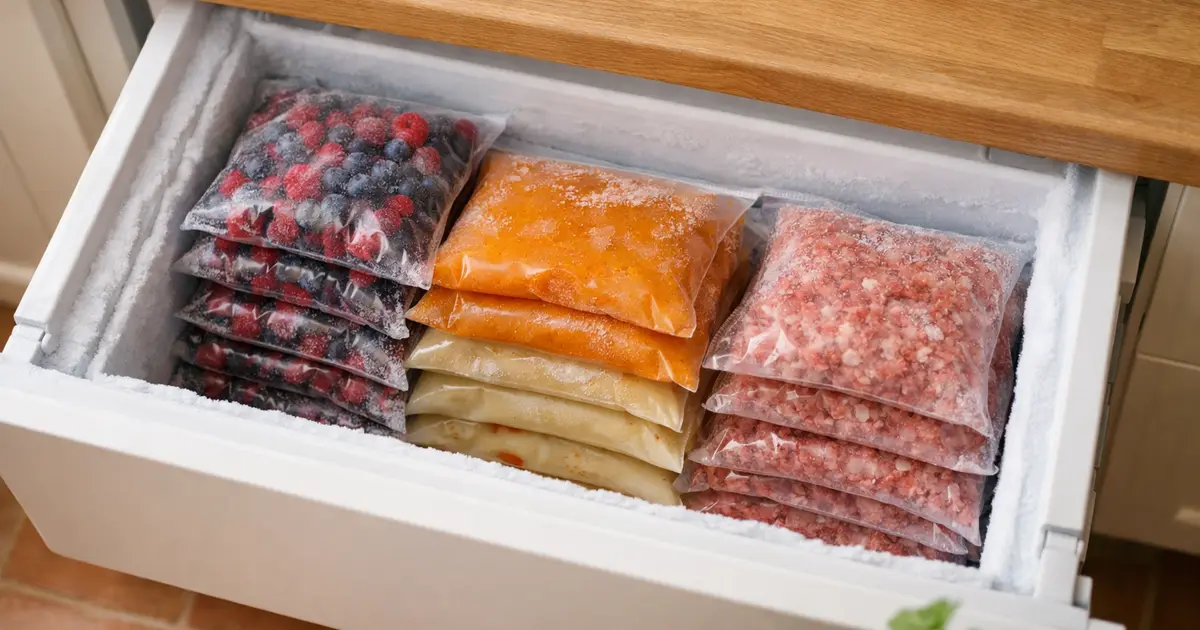
Quality at the time of freezing sets the quality you get back, so freeze foods before they are near the end of their fridge life. Good packaging helps prevent freezer burn, and fast freezing keeps the texture better. FSIS notes that a food 2-inches thick should freeze completely in about 2 hours, so spread packages in one layer until they are solid and stack them afterward. Freeze leftovers within 3-4 days of cooking.
For related pages, see the refrigerator and freezer storage chart for hand-checked household staples and the refreezing page for what happens after a thaw.
Worked example: a family-size pack of chicken
You buy a large pack of chicken thighs but can only cook half this week. Search the table for chicken and look at the rows that match. The refrigerator span is short, so freeze the surplus the same day. Divide it into meal-size bags, press out the air and label each with the date. The freezer span tells you roughly how long the quality will hold. If you find a bag well beyond that, check the smell after thawing and cook it fully; it will be safe if it stayed frozen, though it may be drier than you hoped.
When to use judgment
A freezer that has been off, a package that thawed on the counter, or food you cannot date all call for caution. If you can't be sure the food stayed frozen, discard it. People with weakened immune systems, older adults, young children and anyone who is pregnant should ask their doctor about higher-risk foods.
Sources
- USDA FSIS, FoodKeeper data (version 128) fsis.usda.gov
- USDA FSIS, Freezing and food safety fsis.usda.gov
- USDA FSIS, "Danger zone" (40 °F to 140 °F) fsis.usda.gov