
LookupA searchable reference table
Buttermilk Substitute: Milk and Lemon Juice, Vinegar or Yogurt
Make a stand-in for buttermilk with soured milk, cream of tartar or plain yogurt. The page gives the amount for a cup, notes where sources differ on standing time, and explains what changes.
On this page
| Ingredient | Amount | Swap | Best for | What changes |
|---|---|---|---|---|
| Buttermilk (or sour milk) | 1 cup | 1 tablespoon lemon juice or vinegar plus enough milk to make 1 cup; let stand 5 to 10 minutes | Pancakes, biscuits and quick breads, and any recipe using baking soda | Thinner and milder than cultured buttermilk, but acidic enough to react with baking soda. Sources differ on standing time |
| Buttermilk (or sour milk) | 1 cup | 1 cup milk plus 1¾ teaspoons cream of tartar | Baking when you have cream of tartar but no lemon juice or vinegar | Supplies the acid for baking soda without adding extra liquid |
| Buttermilk | 1 cup | 1 cup plain yogurt | Pancakes, muffins and other batters that use baking soda | Acidic like buttermilk, so it still works with baking soda |
What buttermilk does in a recipe
Buttermilk is a tangy, slightly thick cultured milk. In baking it does a pair of jobs. It adds moisture, and it supplies an acid that reacts with baking soda to make the carbon dioxide that lifts pancakes, biscuits, quick breads and cakes. Extension baking guidance lists several acidic ingredients that pair with soda, including sour cream, molasses and brown sugar, and buttermilk belongs in the same group. That is why recipes that call for it nearly always call for soda too.
A good substitute therefore has to be both liquid and acidic. The ones below meet both tests.
The swaps
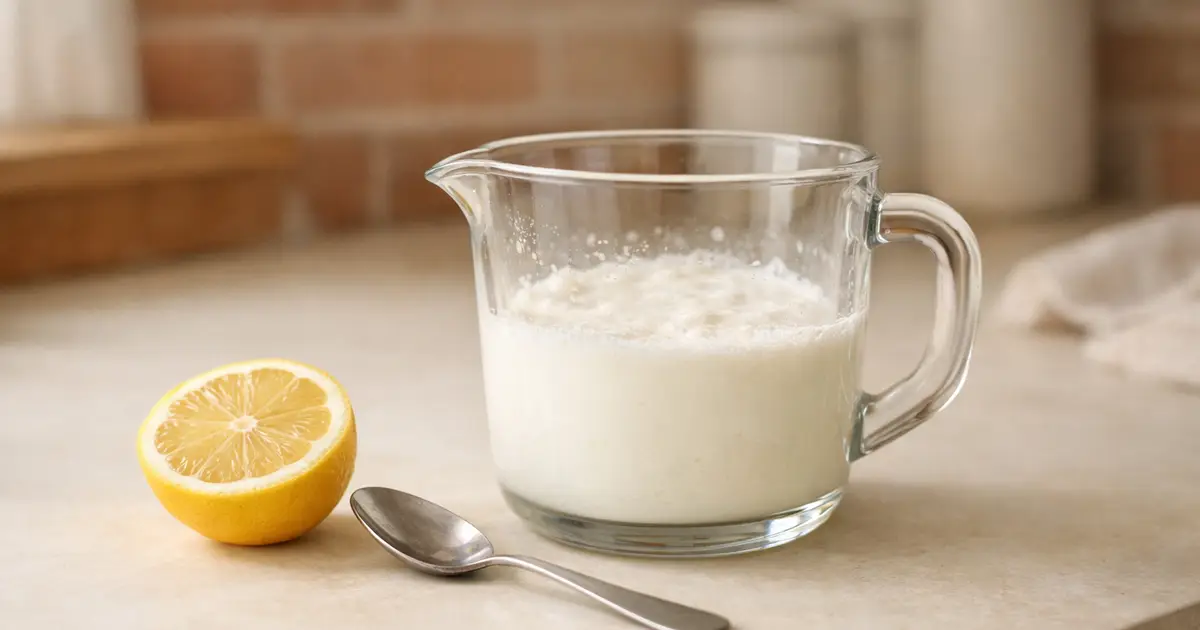
Soured milk. Stir 1 tablespoon of lemon juice or vinegar into a measuring cup, then add regular milk until the cup is full. Let it stand. Most sources say 5 minutes, and one gives 5 to 10 minutes, which is why the row shows a range. The milk will thicken and look slightly curdled, which means the acid is working. This is the most flexible swap because lemon juice or vinegar is usually in the kitchen.
Cream of tartar and milk. Cream of tartar is a dry acid, so it can sour a cup of milk without adding any extra liquid. The amount is 1 3/4 teaspoons of cream of tartar for each cup of milk. Whisk it in well so it spreads evenly.
Plain yogurt. Sources agree on 1 cup plain yogurt in place of a cup of buttermilk. Yogurt is thicker, so the batter may be a little stiffer than the recipe intends; a splash of milk loosens it if needed.
What to expect
Soured milk is thinner and milder than true cultured buttermilk, so pancakes and cakes may be a touch less rich and tangy. Yogurt gives a closer tang and a thicker batter. In every case the rise should be close to the original, because the acid is doing the same work. Treat the swap as a stand-in rather than an equal, and write down what you did in case you want to repeat it.
Matching the swap to the recipe
For pancakes and waffles, soured milk is easiest, since the batter is thin enough to hide the difference. For biscuits, where the dough is stiff, soured milk or yogurt both work. For cakes and muffins, yogurt gives a moist crumb, and cream of tartar suits you if you want to keep the batter's liquid exactly as written.
Worked example: chocolate cake with no buttermilk
A chocolate cake calls for a cup of buttermilk and a spoonful of baking soda. You have milk and a bottle of white vinegar. Spoon 1 tablespoon of vinegar into the cup, fill with milk, and let it sit for 5 minutes while you measure the dry ingredients. Pour it in as written. The cake should rise normally. If you have only yogurt, use it cup for cup and keep an eye on the thickness of the batter.
Related swaps and fixes
If the recipe asks for baking powder instead of soda and you are out, see the baking soda and baking powder guide. If the cake still sinks, the cake troubleshooter helps you trace the cause. Opened cartons of buttermilk and yogurt do not last forever, so check how long food lasts before you rely on one that has been in the refrigerator for a while.
Sources
- University of Nebraska–Lincoln Extension, Basic ingredient substitutions food.unl.edu
- Utah State University Extension, List of ingredient substitutions for cooking and baking extension.usu.edu
- University of Illinois Extension, Recipe substitutions extension.illinois.edu
- North Dakota State University Extension, Ingredient substitutions (FN198) ndsu.edu
- NDSU Extension, Prairie Fare: What ingredient swaps work in recipes? ag.ndsu.edu
- Kansas State University Research and Extension, Ingredient substitutions (L730) bookstore.ksre.ksu.edu
- NDSU Extension, Prairie Fare: Add to the levity of baking with these tips ag.ndsu.edu