
ChecklistTick as you go, saved in this browser, prints cleanly
Freezer Meal Planner: Prep, Cool, Package, Label and Thaw
Follow the steps from choosing a dish to reheating it, with FSIS freezer times for casseroles, soups, cooked meat and poultry.
On this page
Freezer meal planner
From choosing what to freeze to thawing it safely. Freezer times are for quality; frozen food stays safe indefinitely at the right temperature.
0 of 26 done
Choose what to freeze
FSIS says food frozen at peak quality tastes better when it is thawed.
A refrigerator's freezing compartment that cannot hold that temperature is for short-term storage only.
Prep and cook
FSIS says enzyme activity continues in frozen vegetables unless they are blanched.
Cool
Package and label
FSIS says proper packaging prevents freezer burn, which dries food in spots but does not make it unsafe.
Freezer times are about quality, so you need the date to follow them.
Freeze
Freezer times for best quality
FSIS chart for food kept at the freezer line. Safe indefinitely; these times are for quality only.
Thaw and reheat
Sources (6)
- USDA FSIS, Freezing and food safety fsis.usda.gov
- USDA FSIS, Leftovers and food safety fsis.usda.gov
- USDA FSIS, The big thaw: safe defrosting methods fsis.usda.gov
- USDA FSIS, Safe minimum internal temperature chart fsis.usda.gov
- USDA FSIS, "Danger zone" (40 °F to 140 °F) fsis.usda.gov
- USDA FSIS, FoodKeeper data (version 128) fsis.usda.gov
What this planner covers
Cooking ahead for the freezer is one of the best ways to eat well on a busy week, and it only works if each stage is done right. The checklist runs through choosing what to freeze, cooking safely, cooling quickly, packaging and labeling, freezing fast, and thawing and reheating. Each step is tied to the USDA page that explains it.
It is for anyone batch-cooking soup, casseroles, sauces or cooked meat, and for families who buy meat in bulk and portion it for later.
Reading the freezer times
The section called "Freezer times for best quality" lists USDA's numbers of months for common cooked and raw foods held at the freezer line. They are quality times. USDA says freezing keeps food safe almost indefinitely, so a casserole past its window is not dangerous. It may be dry, flat or freezer-burned. Freezer burn shows up as grayish-brown leathery spots, and USDA says you can cut those away before or after cooking.
For foods not on the chart, check the storage lookup or judge by odor after thawing. A rancid or off smell means the food should be discarded.
What changes the result
Speed matters. FSIS says rapid freezing prevents the large ice crystals that make food drip and lose juiciness, which is why the list asks you to spread packages in a single layer. Packaging matters too: air is what causes freezer burn. A freezer that cannot hold its temperature, such as a small compartment inside a refrigerator, is for short-term storage only. Check it with an appliance thermometer.
Cool before you freeze
Do not put a hot pot straight into the freezer. Divide food into shallow containers, cut large roasts and poultry into smaller pieces and chill the food promptly. USDA's limit is that perishable food should be refrigerated within 2 hours of cooking. Freezing in portions you will use at once keeps you from thawing more than you need.
Worked example: a double batch of chili
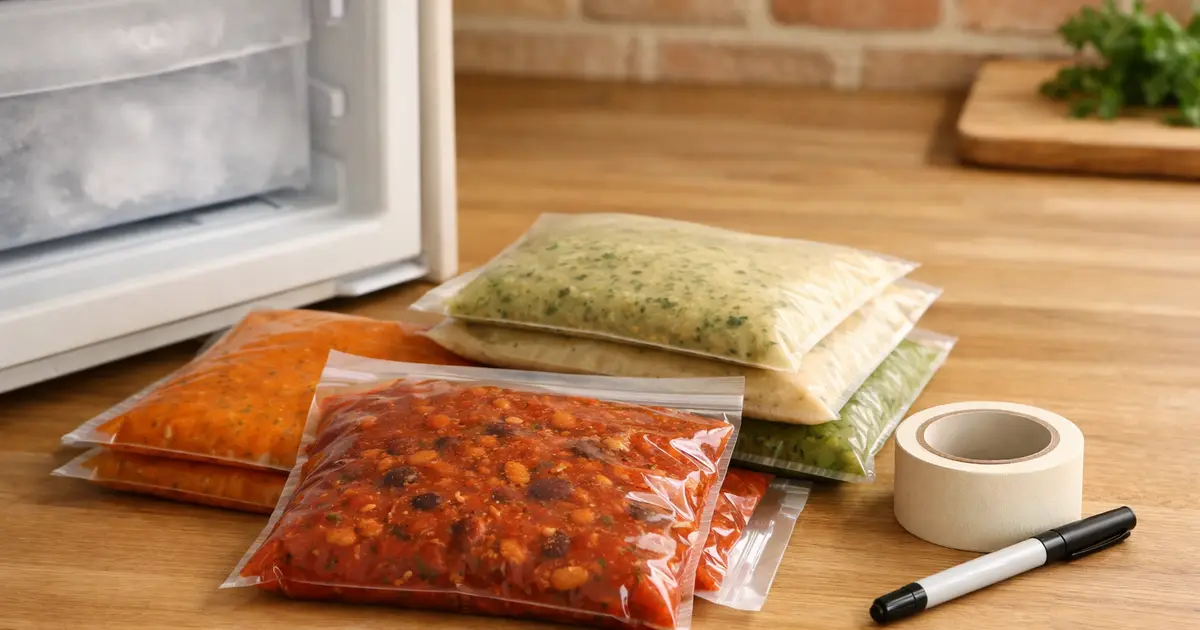
You cook chili to a safe temperature and let it cool in shallow containers. Half stays in the refrigerator for the next few days. The other half is portioned into freezer bags, pressed flat, labeled with the name and today's date, and spread out in one layer on a shelf until frozen solid. Later you move a bag to the refrigerator the night before, and reheat it until steaming, to 165 °F. Because soups and stews have a chart time, you know to use the bag well before that quality window runs out.
Cautions
Cooks feeding a pregnant relative, an older adult, a baby or someone with a compromised immune system should defer to that person's doctor about leftovers and reheated meals. If a freezer failed or a package thawed on the counter, decide by the thawing rules rather than by smell. When you honestly can't say how long something sat out, discard it.
Related pages
Look at the weekly meal planner, the Thanksgiving turkey timeline and how long does food last.