
GuideA plain-language guide with a worked example
The major food allergens, explained
A short list of foods is legally recognized as major allergens in the United States, and labels on most packaged food must name them. Labels do not cover every source of cross-contact.
On this page
If you shop for or cook for someone with a food allergy, a handful of facts do most of the work: which foods the law singles out, where to find them on a label, and what the label does not promise. This guide sets those out in plain language. It is general information drawn from federal agencies, not medical advice. Questions about a diagnosis, testing or an emergency plan belong with a health care provider.
The list in U.S. law
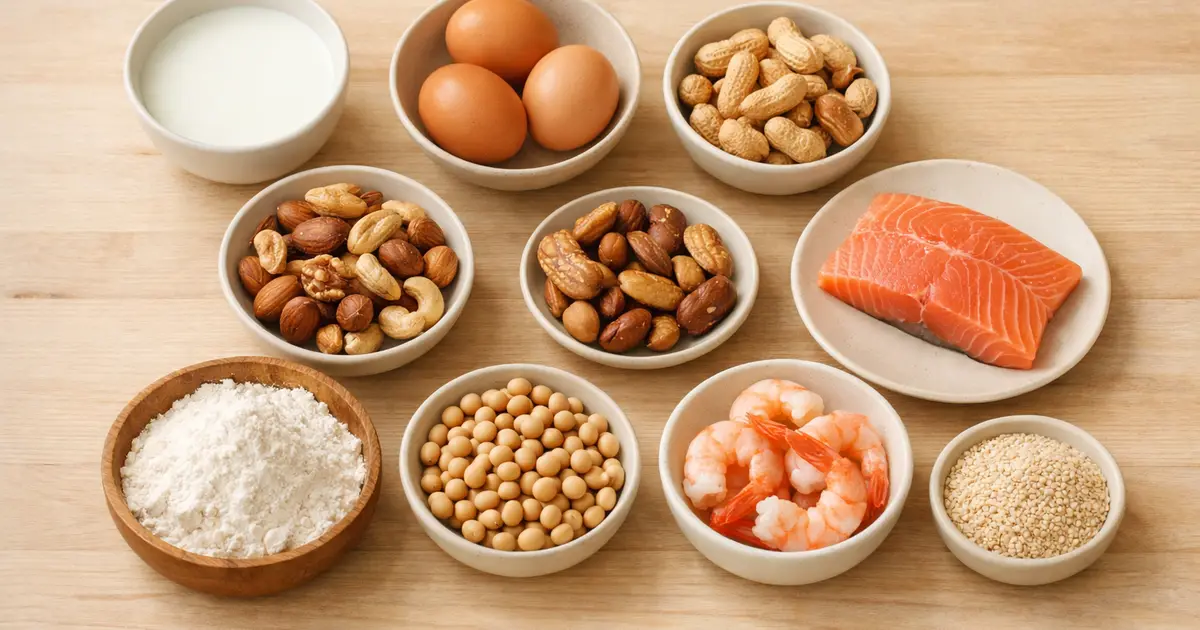
A food allergy is an immune reaction to proteins in a food. Many different foods can trigger one, but federal law singles out a short list. The Food Allergen Labeling and Consumer Protection Act of 2004, known as FALCPA, named eight foods: milk, eggs, fish, Crustacean shellfish, tree nuts, peanuts, wheat and soybeans. When it passed, those accounted for 90 percent of food allergies and serious reactions. The FDA and FSIS note that more than 160 foods can cause reactions, so the list is a floor for label rules rather than a limit on what can harm someone.
On April 23, 2021, the FASTER Act made sesame the 9th recognized in the United States. Its labeling duties took effect January 1, 2023. Products already in interstate commerce before then did not have to be pulled or relabeled, so some items carried no sesame warning for a while. The FDA suggests asking the manufacturer when unsure.
How labels declare an allergen
On packaged foods the FDA regulates, the food source of every major allergen has to appear at least once, in either of these ways:
- In parentheses after an ingredient in the list, such as lecithin (soy), flour (wheat) or whey (milk).
- In a "Contains" statement next to the ingredient list, such as Contains wheat, milk and soy.
A name that already reveals the source, like buttermilk, needs no extra note. The type of tree nut and the species of fish or shellfish must also be given, such as almond or cod. The rule reaches packaged products at retail and in food service, but not foods wrapped after you place an order, such as a sandwich boxed at the counter.
Meat, poultry and egg products belong to the USDA. FSIS requires all ingredients to be listed by common name and encourages the same "Contains" wording voluntarily. Alcoholic beverages, raw agricultural commodities and highly refined oils follow different rules. Always read the label even for foods you have bought often, because ingredients change.
What "may contain" does and does not mean
Phrases such as "may contain" or "produced in a facility that also uses" are not required by law. They are voluntary advisories about cross-contact, the accidental transfer of allergen traces into a food that was not meant to hold them, through shared equipment or lines, ineffective cleaning, or dust. The FDA has not set a threshold amount for any allergen. The practical lesson is that the absence of an advisory is not a guarantee, and its presence is not a measured level.
Cross-contact in a home kitchen
The CDC's school guidelines give a useful model for any kitchen. It says to clean and sanitize all food-contact surfaces, to clean trays and baking sheets after each use because oils can seep through liners, and to prepare food for an allergic child separately, making items without allergens first, using separate space and equipment, and labeling and storing them before other foods. Hand washing before and after eating also matters. These ideas carry over to dinner parties and shared kitchens.
Recognizing a reaction
According to the FDA and FSIS, symptoms may include hives, flushed skin, itching in the mouth, swelling of the face, tongue or lips, vomiting, cramps, coughing or wheezing, dizziness and trouble breathing. Anaphylaxis can start mildly and worsen quickly. Agencies advise stopping the food, seeking medical attention, and keeping prescribed treatment such as epinephrine easy to reach. FSIS says symptoms typically appear within minutes or up to 2 hours after a person eats the food or touches it. Nothing on this site replaces your own physician's advice.
Worked example
You are hosting a dinner and one guest has a tree nut allergy. At the store you pick up a granola for the dessert topping and read the label instead of trusting your memory of the last brand. The ingredient list shows "almonds" and a Contains line naming tree nuts, so that box is out. The next brand has no tree nut in the list and no advisory line, so you choose it. At home you wash the cutting board and baking sheet with soap and hot water, make the guest's portion first on clean equipment, and cover and set it aside before anything else is prepared. You keep the package so the guest can read the label too.
Frequently asked questions
Does gluten count as a major allergen? No. The FDA monitors gluten and several additives separately, and it requires specific labeling in some cases.
Can the allergy change over time? FSIS says some are outgrown and severity can change, so follow your clinician's advice.
Who regulates labels on a deli sandwich? Foods wrapped after a customer's order are outside the labeling rule, so ask the staff directly.
If you need to write to a manufacturer or school about an allergy, our food allergy letter tool can draft it. For related kitchen hygiene, see the safe internal temperature chart and our guide to washing raw chicken.