
GuideA plain-language guide with a worked example
Why meat and poultry change color, and when it matters
Color changes in meat and poultry are usually normal chemistry, not spoilage. A color change together with an off smell or a sticky, slimy feel is the real warning, and a thermometer, not color, tells you when cooked food is safe.
On this page
Color is what most of us judge when we shop for meat, and again before we serve it. A package that looks dull seems old, a chicken breast with a pink edge seems raw, and a burger that has turned brown seems done. The USDA's Meat and Poultry Hotline hears from worried cooks about all of these, and the answers are more reassuring than people expect, with one important exception. This guide explains what is going on in the meat and which colors actually deserve attention.
The pigment behind the color
Most of the red in meat comes from myoglobin, a protein fixed in muscle cells. On its own, myoglobin is purplish. Mixed with oxygen it becomes oxymyoglobin, which is bright red. A smaller part of the color comes from hemoglobin, the pigment in circulating blood, although a little remains in the tissues after slaughter.
Plenty of other things shift the color too: the age of the animal, the species, sex, diet and even how much exercise it got. Older animals have more myoglobin, so their meat is darker. Muscles that work harder are darker than muscles that stand still, which is why one animal yields meat in different shades. The USDA notes that the same logic explains why poultry is lighter than beef: it has much less myoglobin. In a turkey, the legs do the walking and so they are dark, while the breast and wings stay white.
Colors in the meat case
Fresh meat has a short window of ideal color. The USDA lists the best surface shades as cherry-red for beef, dark cherry-red for lamb, grayish-pink for pork and pale pink for veal, and calls them highly unstable and short-lived.
- Purplish-red. Meat sealed away from air, as in a vacuum package, shows myoglobin's own purple-red. Open the package and let it breathe, and it blooms to red.
- Bright red. Oxygen turns myoglobin to oxymyoglobin. Store wrap that lets oxygen through keeps cut meat looking this way.
- Brownish-red. Store lighting and constant contact with oxygen eventually produce metmyoglobin, a pigment that turns meat brownish. The USDA says this alone does not mean the product is spoiled.
- Red outside, grayish-brown inside. Packaged ground beef often looks this way because oxygen reaches the surface but not the center. The USDA says it does not mean the meat is spoiled or old.
- Darkened in the refrigerator. A beef roast that darkens is going through oxidation, which is a normal change during refrigerator storage and does not make it unsafe.
Raw poultry ranges from bluish-white to yellow, and all of those shades are normal. The bluish cast shows up in younger birds, which carry less fat under the skin, and yellow skin can come from marigolds in the feed. Raw ground poultry looks darker pink when more dark meat went into the grind and lighter when it includes more white meat or skin.
Freezer color
Meat and poultry change color in the freezer just as they do in the refrigerator. Fading and darkening do not affect safety. Freezer-type wrapping and pressing out as much air as possible keep these changes small. White, dried patches are freezer burn, which appears when food has been frozen for a long time or was not wrapped and sealed well. The food is still safe, but those spots turn dry and tasteless, and you can trim them away. Our freezer food guide can help when you are not sure how long something has been in there.
Iridescence and cured meats
A rainbow sheen on a slice of roast beef or ham looks alarming and is harmless. Meat contains iron, fat and other compounds, and light striking a cut surface splits into colors. Heat and processing can also bring out iridescent or greenish casts. The USDA says iridescence does not represent decreased quality or safety.
Gray or greenish patches on cured meats are a different story and deserve a closer look. Light and oxygen break down the pigments formed during curing, and the same conditions that fade the color can go along with microbial spoilage. Cure ingredients such as nitrite chemically change muscle color, which is why cured raw pork is gray while cured cooked pork, such as ham, is light pink. Airtight packaging and storage away from light slow the fading.
When color is a spoilage sign
Color by itself is a weak signal. The USDA says spoilage may bring fading or darkening, but it comes with other clues: an off odor, a sticky or tacky surface, or a slimy feel. If meat has those characteristics, do not use it. If it merely looks duller than it did yesterday, smell it, touch it and check how long it has been stored. Our refrigerator and freezer storage chart gives the time limits to compare against.
Cooked meat: color does not equal done
This is the part of the story that matters most, and it runs in both directions.
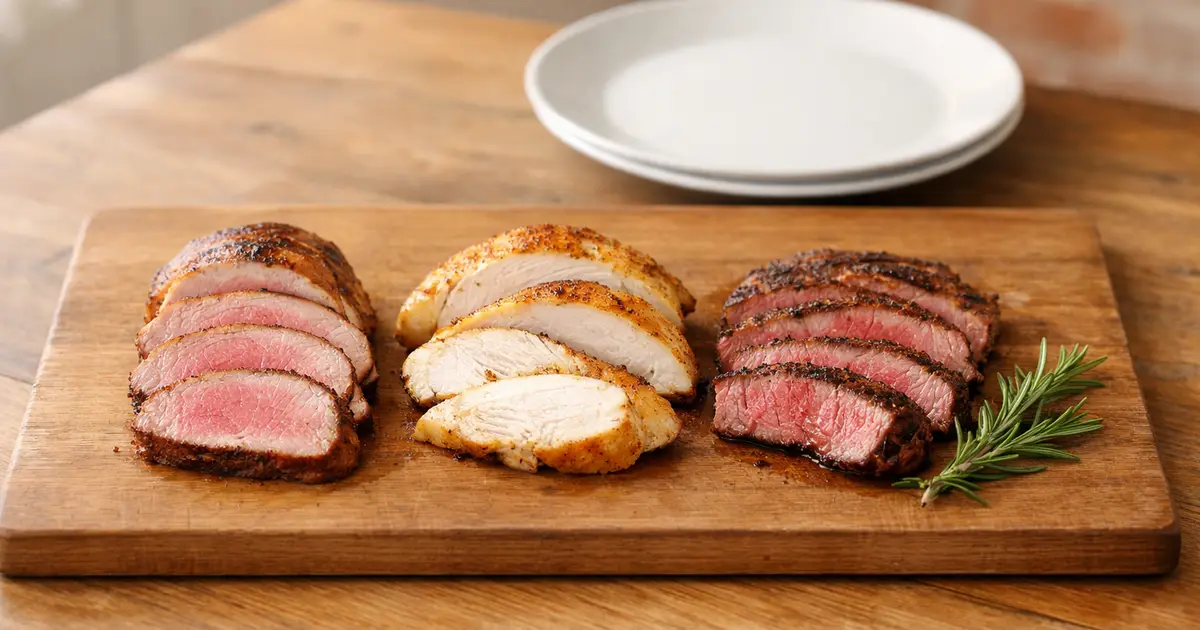
Pink can be safe. Ground beef can stay pink inside after it is safely cooked. The USDA points to a reaction between oven heat and myoglobin, and to vegetables with nitrites cooked alongside the meat. Cooked poultry can be white, pink or tan. Gases in a heated gas or electric oven react chemically with hemoglobin in the meat and give it a pink tinge, and young birds show the most pink because their thinner skin lets those gases reach the flesh. Natural nitrates and nitrites from feed or water can add to it. Turkeys are young at slaughter, 4 to 5 months old, and the meat of a smoked turkey is always pink. Poultry grilled or smoked outdoors can have a pink rim about one-half inch wide even when every part is well past the safe temperature.
Dark bones are cosmetic. Bones and the meat around them can darken in cooked poultry, mostly in young broiler-fryer chickens of 6-8 weeks. Their bones have not fully hardened, so pigment from the marrow seeps outward. Freezing can add to it. The USDA calls this an aesthetic issue, not a safety one, and says the meat is safe once all parts reach 165 °F.
Brown can be unsafe. Ground beef may turn brown before it reaches a temperature that destroys bacteria. The USDA says a hamburger taken to 160 °F (or the poultry temperature for ground poultry) is safe regardless of color, and that relying on brown is taking a chance. It cites a finding that one in four hamburgers that look cooked may not be safely cooked, and that only about 15% of people consistently use a thermometer.
Using a thermometer
Place the probe in the thickest part of the meat, away from bone, fat and gristle. For a whole chicken or turkey, take readings in the thickest part of the breast and deep in the thigh and wing. Every piece, including any that is still pink, is safe to eat once all parts reach the poultry temperature. Our thermometer guide covers the technique in detail, and the safe internal temperature chart lists targets for other foods.
Quick reference
| What you see | What it usually means | What to do |
|---|---|---|
| Purple-red meat in a vacuum pack | No oxygen yet | Safe; color brightens in air |
| Brownish-red or dark roast | Oxidation | Safe if smell and feel are normal |
| Gray center in ground beef | Little oxygen inside | Safe; judge by smell and feel |
| Rainbow sheen | Light on meat compounds | Harmless |
| Sticky or slimy surface with an off odor | Spoilage | Do not use |
| Pink cooked chicken or turkey | Chemistry of cooking | Trust the thermometer |
| Brown burger | Not proof of anything | Check temperature |
When in doubt
Let your nose and fingers settle questions about raw meat, and let a thermometer settle questions about cooked meat. If an off smell, tacky feel or sliminess is present, discard it whatever the color. And if you cannot confirm a safe temperature in a pink-looking dish, return it to the heat instead of cutting into it again and again.
Sources (3)
- USDA FSIS, The Color of Meat and Poultry fsis.usda.gov
- USDA FSIS, Is Pink Turkey Meat Safe? fsis.usda.gov
- USDA FSIS, Doneness Versus Safety fsis.usda.gov