
LookupA searchable reference table
Food Date Label Decoder: Best By, Sell-By, Use-By and Codes
Search each date phrase and code in the USDA's own words. Most are quality or inventory dates; infant formula is the exception.
On this page
| Label or code | What the USDA says it means | Is it a safety date? |
|---|---|---|
| Best if Used By / Before | When the product will be of best flavor or quality | No. It is not a purchase or safety date. |
| Sell-By | How long the store should display the product for sale, for inventory management | No. It is not a safety date. |
| Use-By | The last date recommended for using the product while at peak quality | No, except on infant formula. |
| Freeze-By | When to freeze the product to keep peak quality | No. It is not a purchase or safety date. |
| Open dating | A calendar date applied by the manufacturer or retailer | Tells how long the product will be at its best quality. |
| Closed dating (coded dates) | A series of letters and/or numbers that identifies the date and time of production | Typically on shelf-stable products such as cans and boxes. Not written for shoppers. |
| Infant formula Use-By date | Federal regulations require it. Using formula by this date ensures it contains each nutrient listed on the label. | Yes. Do not buy or use baby formula after its Use-By date. |
| Egg carton pack date | The day the eggs were washed, graded and placed in the carton, as a three-digit day of the year: 001 is January 1 and 365 is December 31 | Not a safety date. Tells you how old the eggs are. |
| Egg carton Sell-By (USDA grade shield) | The code date may not exceed 30 days from the date of pack | Not a safety date. |
| Can code | A code for the date the product was canned. It lets makers track and rotate stock and find products in a recall. | Not meant for you to read as a Best if Used By date. |
| Open date on a high-acid can (tomatoes, fruit) | Usually a Best if Used By date for peak quality. High-acid canned foods keep their best quality for 12 to 18 months. | Quality. Discard cans that are dented, rusted or swollen. |
| Open date on a low-acid can (meat, vegetables) | Low-acid canned foods keep for two to five years | Quality. Discard cans that are dented, rusted or swollen. |
| Bar code (UPC) | Black lines above a series of numbers, read by store scanners for price and inventory | No. The numbers are not used to identify recalled products. |
| Date has passed at home | If handled properly, the product should still be safe and wholesome until spoilage is evident (infant formula excepted) | Judge by smell, flavor and texture. Do not eat food that has spoiled. |
| Cold food left out | Cold chicken salad left out above 40 degrees F (4.4 degrees C) for more than two hours (one hour at 90 degrees F or higher) should not be eaten, whatever the date says | Safety. The label date does not protect food that was mishandled. |
What the decoder does
Date phrases on food are not standardized in the United States, so the same idea appears under many names. This table takes each phrase and code the USDA Food Safety and Inspection Service explains in its page on food product dating and shows what the agency says it means, and whether it is a safety date. Search for the words on your package and read the row.
Dates come in a pair of families. Open dating is a calendar date a person can read. Closed dating is a code of letters and numbers meant for the company, used to trace a product's production and to find it in a recall. A can code is the best-known example.
Quality dates versus safety
A Best if Used By date tells you when a product has its best flavor or quality. A Sell-By date is for the store's inventory. A Use-By date is the last date recommended for peak quality. A Freeze-By date says when to freeze a product to keep its quality. None of these is a safety date, and FSIS says that foods without signs of spoilage may be eaten after the date. The agency recommends the Best if Used By wording because research shows it conveys the meaning most clearly. USDA estimates that 30 percent of the food supply is lost or wasted at the retail and consumer levels, and confusion over dates is one cause.
That does not make the date irrelevant. A date passing is a cue to look closely. Spoiled food develops an off odor, flavor or texture. If it has, do not eat it. FSIS also separates the kinds of bacteria involved: pathogenic bacteria cause foodborne illness, while spoilage bacteria cause the off taste and odor.
What the date cannot do
A label date assumes the food was handled properly. If cold chicken salad sits above 40 degrees F for more than 2 hours, or 1 hour in hot weather, it should not be eaten, no matter what the carton says. Food that was thawed on the counter or handled by people without good hygiene is not made safe by a late date.
Eggs and cans
Egg cartons with the USDA grade shield carry a pack date, a day-of-the-year code. If a Sell-By date also appears, the code may not run beyond 30 days from packing. For cans, USDA says high-acid foods such as tomatoes and fruit keep their best quality for 12 to 18 months, while low-acid foods such as meat and vegetables keep for longer. Discard any can that is dented, rusted or swollen. For deeper egg detail, see the egg storage and safety guide.
Worked example: yogurt and a can of tomatoes
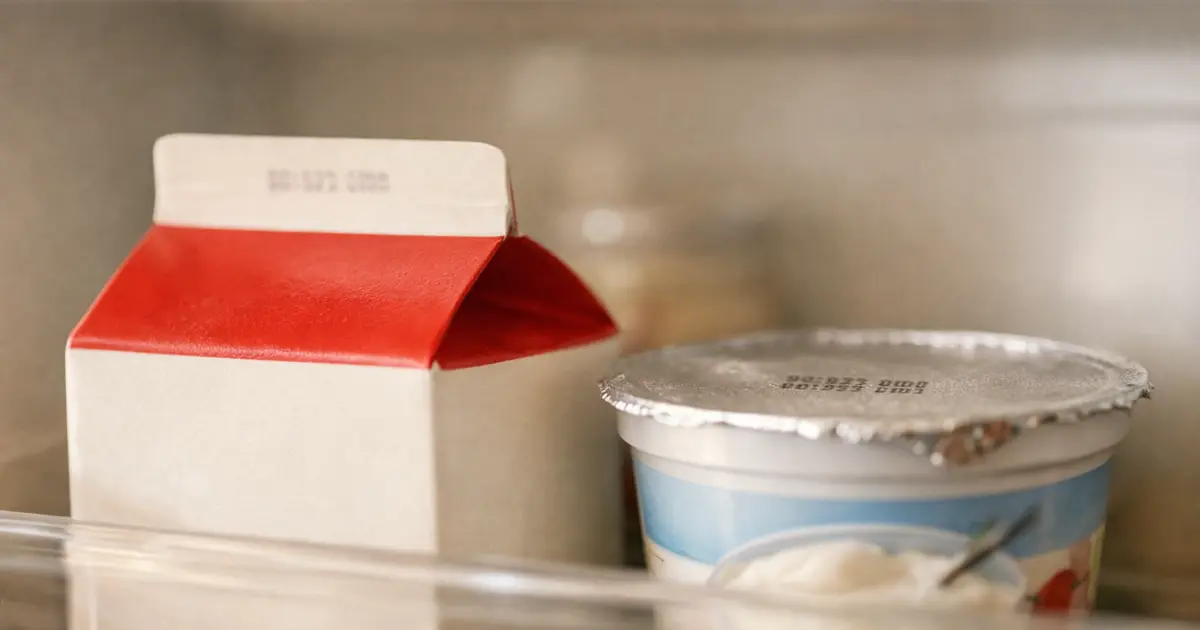
A tub of yogurt in your fridge shows a Best if Used By date from last week. It has been cold the whole time, the lid was never lifted, and it smells normal. Under FSIS guidance, the date is a quality marker, so you look and smell first. On the same shelf, a jar of baby formula is past its Use-By date. That one goes in the trash, because the agency says formula used by its date contains each nutrient listed on the label and stays an acceptable quality. A can of tomatoes with a coded stamp on the bottom needs no decoding: the code is for the maker, and your job is to check that the can is not dented, rusted or swollen.
Where to go next
For the full list of storage times, use the food storage lookup. For the difference between safety limits and quality dates, read the guide to safety and quality labels. If you can't tell whether something was kept cold, discard it, and ask your doctor about higher-risk foods if you are pregnant, older, very young or immunocompromised.
Sources
- USDA FSIS, Food product dating fsis.usda.gov
- USDA FSIS, "Danger zone" (40 °F to 140 °F) fsis.usda.gov
- USDA FSIS, Freezing and food safety fsis.usda.gov