
LookupA searchable reference table
Cornstarch Substitute: Flour, Tapioca and Other Thickeners
Swap cornstarch for flour or tapioca, or replace flour with a starch, using amounts from extension sources, with notes on what changes in a sauce and in homemade powdered sugar.
On this page
| Ingredient | Amount | Swap | Best for | What changes |
|---|---|---|---|---|
| Cornstarch (for thickening) | 1 tablespoon | 2 tablespoons all-purpose flour | Sauces, gravies and fillings that are cooked | Flour is the weaker thickener, so you use twice the amount |
| Cornstarch (for thickening) | 1 tablespoon | 2 tablespoons granular tapioca | Cooked sauces and fillings | Needs to cook with the liquid until the granules soften and thicken |
| All-purpose flour (for thickening) | 1 tablespoon | ½ tablespoon cornstarch, potato starch, rice starch or arrowroot starch | When a recipe calls for flour as the thickener and you want a starch instead | Needs only half as much as flour (1½ teaspoons per tablespoon) |
| Powdered (confectioners') sugar | 1 cup | 1 cup granulated sugar plus 1 teaspoon to 1 tablespoon cornstarch, blended until powdery | Frostings and dustings when the box is empty | Needs a food processor or blender; sources differ on the cornstarch |
What a thickener does
Starches thicken because their grains swell and absorb liquid when heated. Cornstarch is nearly pure starch, which is why a small spoonful goes a long way. Flour is only partly starch, so it takes more of it to get the same thickness. Other starches, including potato starch, rice starch and arrowroot, behave like cornstarch and are used in similar amounts.
Flour in place of cornstarch
The most common swap is plain flour. Extension sources agree on 2 tablespoons of all-purpose flour for each tablespoon of cornstarch, the amount shown beside 1 tablespoon in the table. Flour is the weaker thickener, so you need double the volume, and it should simmer in the liquid long enough to cook, not just warm through. To avoid lumps, stir the flour into a small amount of cold water or melted fat first, then whisk it into the hot liquid.
Tapioca
Granular tapioca also works. The sources list 2 tablespoons granular tapioca for a tablespoon of cornstarch. Tapioca grains need to cook with the liquid until they soften, so it suits fillings and puddings that simmer or bake for a while better than a quick pan sauce.
Replacing flour with a starch
If a recipe calls for flour as the thickener and you would rather use starch, cut the amount sharply: 1/2 tablespoon of cornstarch, potato starch, rice starch or arrowroot starch for each tablespoon of flour. That is the same ratio in reverse, and it explains why gravy made with starch needs so little.
A related use: homemade powdered sugar
Cornstarch also turns up as an ingredient in homemade powdered sugar. Granulated sugar ground in a food processor with a spoonful of cornstarch becomes fine and powdery. The sources give different amounts of cornstarch, so the table shows the range. Use the low end for a dusting and a little more for a frosting.
What to expect
Cornstarch sauces are usually clear and glossy, while flour sauces are more opaque. When cornstarch replaces flour in baking, you are changing the structure of the batter, which only flour provides, so use these swaps for sauces and fillings rather than cakes.
Worked example: pan gravy
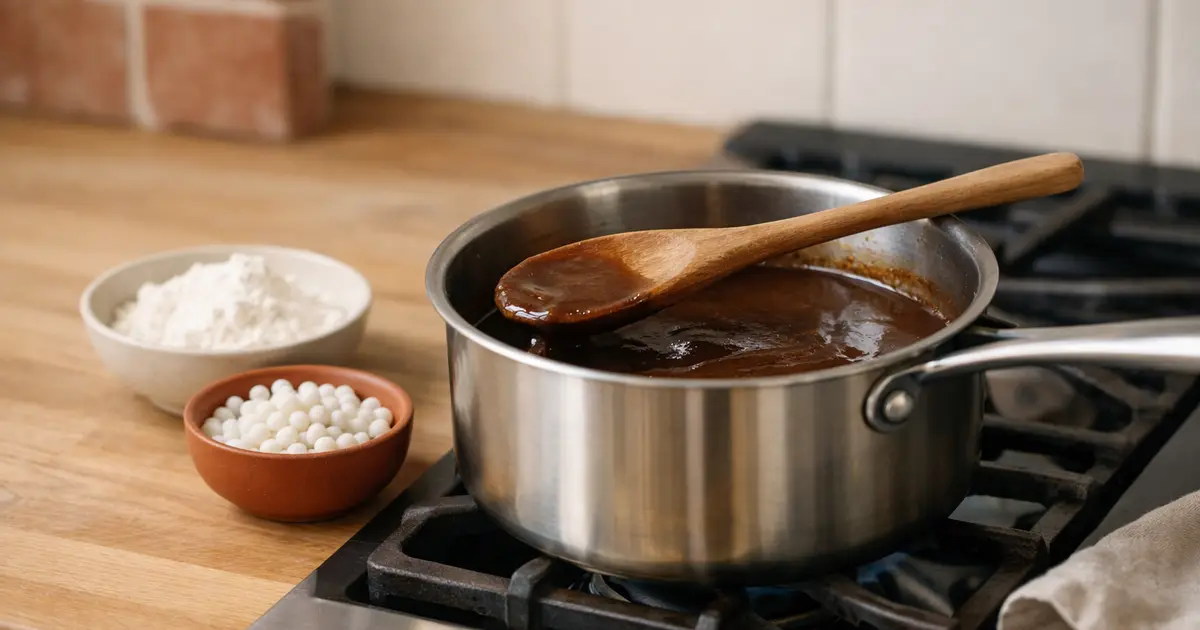
A gravy recipe uses a spoonful of cornstarch dissolved in cold water. You have only flour. Use the double amount from the table, whisk it with a little cold water into a slurry, and pour it into the simmering pan juices while stirring. Let it bubble gently for a few minutes. If it is still thin, you can add another spoonful of the flour slurry, but wait for the sauce to simmer first, because it thickens as it cooks.
Related pages
Yogurt in a hot sauce can separate unless a little cornstarch is added, which the sour cream substitute guide explains. For other pantry stand-ins, use the ingredient substitution finder. If you are following a gravy recipe for a roast, our meat roasting times chart tells you when the pan juices will be ready.
Sources
- Texas A&M AgriLife Extension, Quick ingredient substitutions agrilifeextension.tamu.edu
- Utah State University Extension, List of ingredient substitutions for cooking and baking extension.usu.edu
- University of Nebraska–Lincoln Extension, Basic ingredient substitutions food.unl.edu
- University of Illinois Extension, Recipe substitutions extension.illinois.edu
- North Dakota State University Extension, Ingredient substitutions (FN198) ndsu.edu
- Kansas State University Research and Extension, Ingredient substitutions (L730) bookstore.ksre.ksu.edu