
GuideA plain-language guide with a worked example
Should you wash raw chicken?
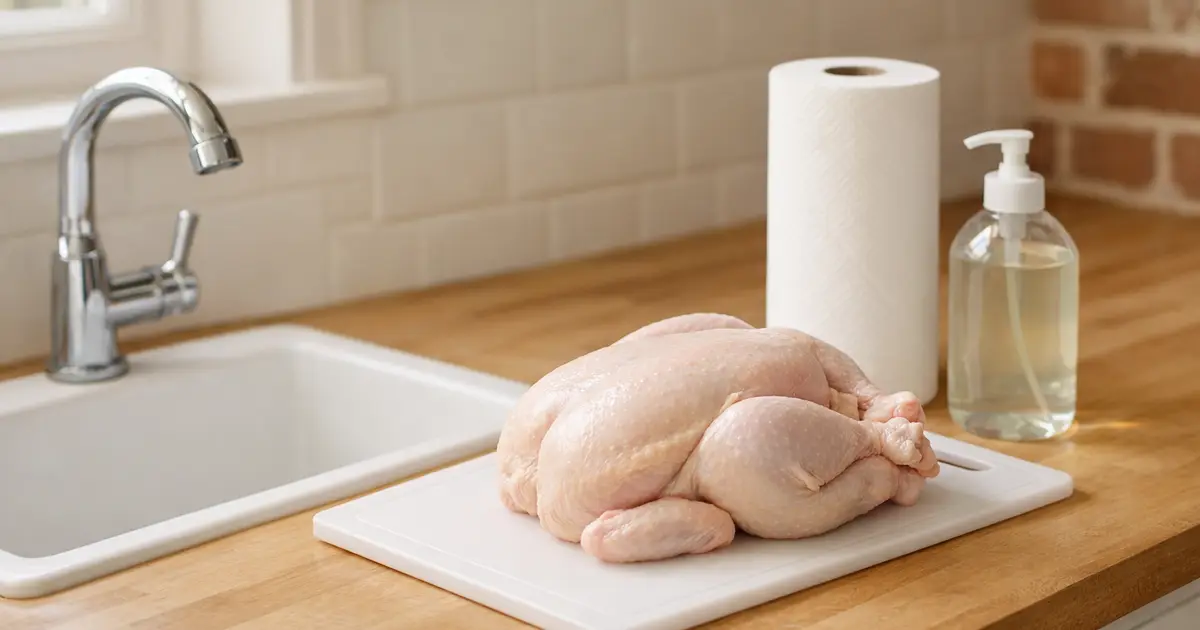
Rinsing raw chicken does not make it safer and can splash bacteria around the kitchen. Cooking to the right temperature is what kills germs.
On this page
Plenty of cooks rinse a chicken under the tap because a parent did, or because the meat feels slimy, or because rinsing seems like the obviously clean thing to do. The USDA looked at what actually happens in a kitchen when people do it, and the answer runs against instinct. This guide explains why rinsing raw poultry and meat is not recommended, how eggs and produce differ, and what to do in place of washing.
What happens when you rinse raw meat
Raw poultry carries bacteria on its surface. Hold it under a running tap or set it in a strainer, and the water that bounces off the skin carries those bacteria with it. Some land on the sink, the faucet, nearby dishes and the countertop, and from there they can reach food that will not be cooked. USDA research found that washing or rinsing meat or poultry increases the risk of cross-contamination in the kitchen. An observational study showed how easily bacteria spread when surfaces are not cleaned and sanitized after poultry is washed.
Those germs can linger. FSIS reports that Campylobacter can survive in a kitchen for up to 4 hours and Salmonella for up to 32 hours. A quick rinse that seems harmless can leave an invisible film on a surface where you will later chop salad.
Why cooking is enough
Heat, not water, removes the hazard. Frying, baking, broiling, boiling or grilling to the proper internal temperature destroys germs on the surface and inside. Rinsing therefore adds risk and removes none that cooking would not handle anyway. Only a food thermometer can confirm the temperature, and our thermometer guide shows where to put it.
Soaking in saltwater or brine is a matter of preference and does nothing for safety. If you do soak, keep the meat in the refrigerator, pour the liquid out carefully, never reuse it, and wash the container and clean and sanitize the sink. Rinsing country ham or bacon to cut the salt removes very little and is not recommended.
Eggs
Do not wash eggs from the grocery store before refrigerating them. Commercial washing is already part of processing, and it removes the natural coating called bloom, which a light layer of food-grade mineral oil replaces. That oil protects the egg during long home storage. Extra handling at home raises the risk of cross-contamination, especially if the shell cracks. Our egg storage and safety guide covers how long they keep.
Produce
Fruits and vegetables are different from meat, and rinsing them is worthwhile. Wash under running tap water before eating or preparing them to remove lingering dirt, which also reduces germs. Firm items such as apples or potatoes can be scrubbed with a brush. Do not use soap, detergent or commercial produce washes, because they are not approved for food and residues can make you sick. Cut away bruised or damaged areas, where bacteria can thrive. Produce labeled pre-washed or ready-to-eat can be used without another wash. Refrigerate cut produce promptly.
Make sure the sink, counters and utensils are clean before you rinse produce, especially if they touched raw meat or its juices.
Preventing cross-contamination instead
Skip the rinse and put the effort here:
- Keep raw meat, poultry, seafood and their juices away from cooked and ready-to-eat food and fresh produce, in the cart, the bag, the refrigerator and on the counter.
- Use separate cutting boards, or wash a board thoroughly before it touches anything else.
- Wash hands for at least 20 seconds after handling raw meat, poultry or their packaging.
- Throw away trays, wraps and egg cartons right after use.
- Clean first with warm soapy water, then sanitize or disinfect. Cleaning removes dirt and some bacteria but does not kill germs. A homemade disinfectant for counters is left on the surface for at least one minute before wiping.
Worked example
You are making dinner with a package of chicken thighs that has some liquid in the tray. Instead of carrying the thighs to the sink, you open the package over a plate, pat the pieces dry with a paper towel, and drop the towel and the tray straight into the trash. The thighs go onto a pan that nothing else has touched. Then you scrub your hands with soap, wipe the counter with hot soapy water, and only afterward wash the lettuce for the side salad at a clean sink. When the thighs come out, a probe in the thickest part confirms the poultry temperature. Nothing raw ever met running water, so nothing was splashed toward the salad.
Frequently asked questions
The chicken feels slimy. Isn't it spoiled? Not necessarily, and washing will not fix spoilage. Check the date and smell, and go by our storage chart.
Can I use vinegar or lemon juice to wash it? FSIS lists these among the things people use, and rinsing in any form is not recommended as the safest method. Cooking to temperature does the work.
I already rinsed it. What now? Clean the sink and surrounding area with hot soapy water, then sanitize, wash your hands, and cook the meat to temperature.
Sources (2)
- USDA FSIS, Washing Food: Does it Promote Food Safety? fsis.usda.gov
- USDA FSIS, Chicken from Farm to Table fsis.usda.gov