
LookupA searchable reference table
Brown Sugar Substitute: Make It From White Sugar and Molasses
How to make brown sugar from granulated sugar and molasses, what plain white sugar changes, and how honey, corn syrup and sugar cuts behave in cookies, cakes and quick breads.
On this page
| Ingredient | Amount | Swap | Best for | What changes |
|---|---|---|---|---|
| Brown sugar (firmly packed) | 1 cup | 1 cup granulated sugar | Recipes where brown sugar is a small part of the flavor | Loses the molasses flavor, color and moisture; brown sugar is also mildly acidic, which matters with baking soda |
| Brown sugar (firmly packed) | 1 cup | 1 cup granulated sugar plus ¼ cup molasses | Closest match to the real thing, in cookies, bars and cakes | Restores the molasses color, moisture and flavor that make brown sugar brown |
| Granulated (white) sugar | 1 cup | 1 cup brown sugar, firmly packed | Bakes where a deeper color and flavor are welcome | Darker and moister, with a molasses taste |
| Granulated (white) sugar | 1 cup | ¾ to 1 cup honey, with ¼ cup less liquid; in baked goods add ½ teaspoon baking soda per cup of honey | Cakes, cookies and quick breads, replacing part of the sugar | Moister and sweeter; honey is acidic, so it needs the soda. Sources differ on the amount |
| Sugar (to cut back) | 1 cup | ⅔ to ¾ cup sugar | Most baked goods and desserts, but not yeast breads | Cookies spread less and brown paler; quick breads brown less and can dry out. Sources differ on how far to cut |
| Corn syrup | 1 cup | 1 cup sugar plus ¼ cup of the recipe's liquid | Recipes that need a syrup but you only have sugar | The added liquid makes up for the syrup's water |
| Honey | 1 cup | 1¼ cups sugar plus ¼ cup liquid | Baking when the jar is empty | Loses honey's flavor and moisture |
| Molasses | 1 cup | ¾ cup sugar plus 1¼ teaspoons cream of tartar, and 5 tablespoons more liquid | Recipes with a small amount of molasses | Loses molasses flavor and color; the cream of tartar replaces its acid |
What brown sugar does
Brown sugar is white sugar with molasses in it. That molasses adds color, a caramel-like flavor and moisture, which is why brown sugar cookies are chewier than white sugar ones. Molasses is also acidic, and extension baking guidance names brown sugar among the acidic ingredients that react with baking soda. Take the molasses out and you lose flavor, color and a little acid.
The closest swap: white sugar plus molasses
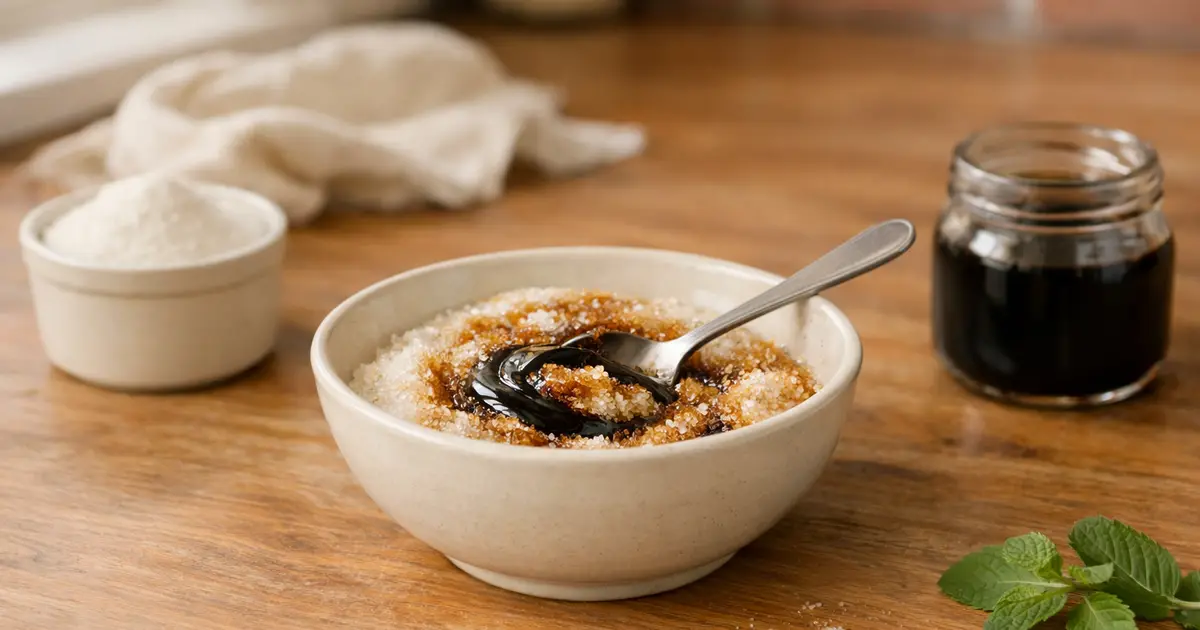
To rebuild brown sugar, mix 1 cup granulated sugar plus 1/4 cup molasses for each cup of firmly packed brown sugar. Stir or rub it together until it looks evenly tan. This returns the color, moisture and flavor.
Plain white sugar
If you have no molasses, extension sources say a cup of granulated sugar can replace a cup of brown sugar. The sugar will do the sweetening, but the bake loses molasses flavor and color, and cookies may be a little crisper and paler. In recipes where brown sugar is a small part of the flavor, the difference is slight.
The other direction
Brown sugar can replace white sugar at the same measure when a deeper color and flavor are welcome. Expect a darker, moister bake with a molasses taste.
Honey, corn syrup and other sugars
Honey can replace part of the sugar, but it is wetter and more acidic. The sources differ on how much honey to use, so the table shows a range, and all of them reduce the other liquid. In baked goods one source adds 1/2 teaspoon of baking soda for every cup of honey. Corn syrup and honey also have swaps of their own, built from sugar plus a little liquid, which the table lists.
Using less sugar
Some bakers want less sugar. Maine Extension says sugar can often be cut by 1/3 and gives 2/3 cup for each cup. Mississippi State Extension suggests a smaller cut. Both warn against cutting yeast breads, where sugar feeds the yeast. In cookies, less sugar means less spread, a paler crust and a less tender cookie. In quick breads, less sugar can mean less browning and a drier loaf.
Measuring packed sugar
Brown sugar is measured firmly packed. A pound of it comes to 2 1/4 cups, which helps when you buy by weight and a recipe uses cups. For gram-and-cup conversions of any ingredient, Calcimator has a converter.
Worked example: oatmeal cookies
The recipe wants a cup of packed brown sugar. You have white sugar and a bottle of molasses. Stir the molasses into the sugar until even, and use it exactly as the recipe says. The cookies should look and chew much as they usually do. If you skip the molasses, expect slightly crisper, paler cookies, and if they spread too much, the cookie troubleshooter shows what to change next time.
More swaps
Looking for something else in the pantry? The ingredient substitution finder lists every swap on this site, and the baking soda and baking powder guide explains why acid matters when brown sugar or honey is involved.
Sources
- Utah State University Extension, List of ingredient substitutions for cooking and baking extension.usu.edu
- North Dakota State University Extension, Ingredient substitutions (FN198) ndsu.edu
- Kansas State University Research and Extension, Ingredient substitutions (L730) bookstore.ksre.ksu.edu
- University of Maine Cooperative Extension, Altering recipes for better health (Bulletin 4167) extension.umaine.edu
- Mississippi State University Extension, How to use ingredient substitutes to lower sugar and fat extension.msstate.edu
- NDSU Extension, Prairie Fare: Add to the levity of baking with these tips ag.ndsu.edu