
GuideA plain-language guide with a worked example
Grilling food safety: from the store to the plate
Grilled meat browns fast on the outside, so a thermometer, not the look of the crust, tells you when it is done. Keep raw and cooked foods apart, keep cold food cold and hot food hot, and never finish a partly grilled piece later.
On this page
Grilling feels casual, which is part of its charm and part of its risk. The cook is outdoors, the platters are balanced on a side table, guests wander over to ask when dinner is, and the food is often carried back and forth between the kitchen and the fire. The USDA notes that more than half of Americans say they cook outdoors all year, so these habits matter in January as much as July. Here is how to keep the whole process safe, from the cooler at the store to the container in the refrigerator afterward.
Shopping and the trip home
Your cart is where the grill plan begins. Pick up meat and poultry last, so it spends the least time warming up on the way through the store. At the checkout, keep packages apart from produce and bread, and bring along a cooler for the ride if the drive is long or the weather is warm.
At home, move raw meat and poultry straight into the refrigerator, and leave it there until you are ready to cook. The USDA's advice at the grill is to take out only what will go onto the fire right away. If the whole package sits on the patio table while you light the charcoal, you have given bacteria a long head start.
Packing a cooler for a cookout
If you are grilling away from home, the cooler needs a plan. Keep it out of direct sunlight, in the shade or a shelter. Avoid opening the lid more than you must, because every peek lets cold air out and warm air in. The USDA also recommends one cooler for drinks and a separate cooler for perishables, which makes sense: the drinks cooler gets opened constantly, while the food cooler should stay shut.
Bring more than you think you need in the way of clean utensils and platters. If you will be away from home, find out whether clean water is available. If not, carry water for preparing food and cleaning, or pack clean cloths and moist towelettes for wiping surfaces and hands. Wash hands with warm water and soap for at least 20 seconds whenever you can.
Keeping raw and cooked food apart
The simplest rule at the grill is also the one most often broken: a plate that held raw meat is not the plate for the cooked meat. Raw meat and poultry, and the juices that come off them, carry harmful bacteria that can contaminate food that is already cooked. Use one platter, cutting board and set of tongs for the raw food, and a clean, separate set for the finished food. Stash the raw tools somewhere out of reach of the serving table, or wash them before they come back. Our guide to rinsing raw chicken explains why a trip to the sink with raw meat is not the answer.
Use a thermometer, not your eyes
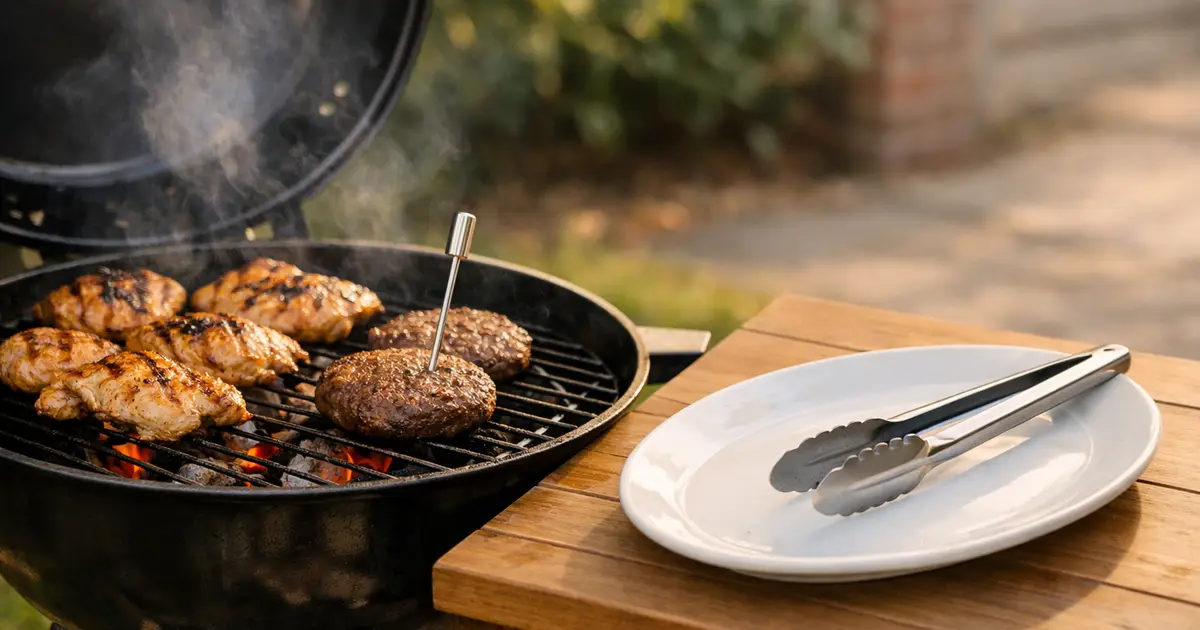
The USDA is blunt about this: meat and poultry cooked on a grill tends to brown quickly on the outside, so the surface can look finished while the center is not. Grill marks, a dark crust and the color of the juices say little about safety. In the USDA's words, one in four hamburgers that look cooked may not be safely cooked.
Check the temperature in the thickest part of the food, away from bone, using a clean thermometer. Our thermometer guide shows where to insert it for burgers, bone-in chicken and thick steaks. The USDA targets are:
| Food | Safe minimum internal temperature |
|---|---|
| Beef, pork, lamb and veal steaks, chops and roasts | 145°F, then rest the meat for at least 3 minutes |
| Ground beef, pork, lamb and veal | 160°F |
| Poultry | 165°F |
For times at different heats and thicknesses, use our grilling and pan cooking times tool. Time is a planning aid; the thermometer is the final word. Our safe internal temperature chart has the full list of other foods.
No partly cooked meat
One instruction in the USDA guidance is written in capital letters: never partially grill meat or poultry and finish cooking it later. Giving chicken a quick sear to get it started, then leaving it on a plate until the fire is ready, lets the food sit warm for a long time without having been cooked through. If you want to speed up dinner, do it in one go: start the food on the grill and cook it all the way, or choose smaller, thinner pieces that finish quickly.
Smoking and pit roasting
Smoking is cooking food slowly and indirectly in the presence of a fire, either in a covered grill with a pan of water under the meat or in a purpose-built smoker. For safety, keep the smoker at 250 to 300°F, and check the food with a thermometer. Pit roasting, which means cooking in a large hole in the ground, is hard to estimate because outdoor temperature, the size of the meat and how fast the coals heat all change the timing. The USDA says a food thermometer must be used to judge both safety and doneness.
Holding cooked food
Once meat is done, keep it hot until it is served, at 140°F or warmer. At the grill, slide cooked pieces to the side of the rack rather than leaving them directly over the coals, where they could overcook. At home, you can hold cooked meat in an oven set at approximately 200°F, in a chafing dish, in a slow cooker or on a warming tray.
Cold side dishes need their own care: potato salad and similar dishes belong in the cooler or on ice, not in the sun next to the grill.
Leftovers and reheating
Put leftovers in shallow containers and refrigerate them promptly. Discard any food left out more than 2 hours, or 1 hour if it is above 90°F outside. When you reheat fully cooked foods such as hot dogs or hamburgers on the grill, bring them to 165°F or until steaming hot.
Cookout checklist
- Meat bought last, kept cold, and stored in the refrigerator until needed.
- Perishables in a shaded cooler that is not opened every few minutes.
- Separate platters and utensils for raw and cooked food.
- Thermometer in the thickest part of every piece before it comes off.
- Nothing partly grilled and set aside to finish later.
- Cooked food kept hot, cold food kept cold, and the clock watched.
- Leftovers in shallow containers, refrigerated promptly.
When in doubt
If you are not sure whether something reached temperature, put it back on the fire and check again. If you are not sure how long it has been on the table, especially on a hot day, throw it out. A thermometer costs little, and it removes most of the guesswork the USDA worries about.
Sources (2)
- USDA FSIS, Grilling Food Safely fsis.usda.gov
- USDA FSIS, Doneness Versus Safety fsis.usda.gov