
TroubleshooterA few questions, then the likely cause and what to change
Cookie Troubleshooter: Spreading, Cakey, Hard or Pale Cookies
Choose what is wrong with your cookies, answer a follow-up question about the dough and pan, and see the likely cause and the fix from university extension sources.
On this page
Cookie troubleshooter: spreading, cakey, hard or pale cookies
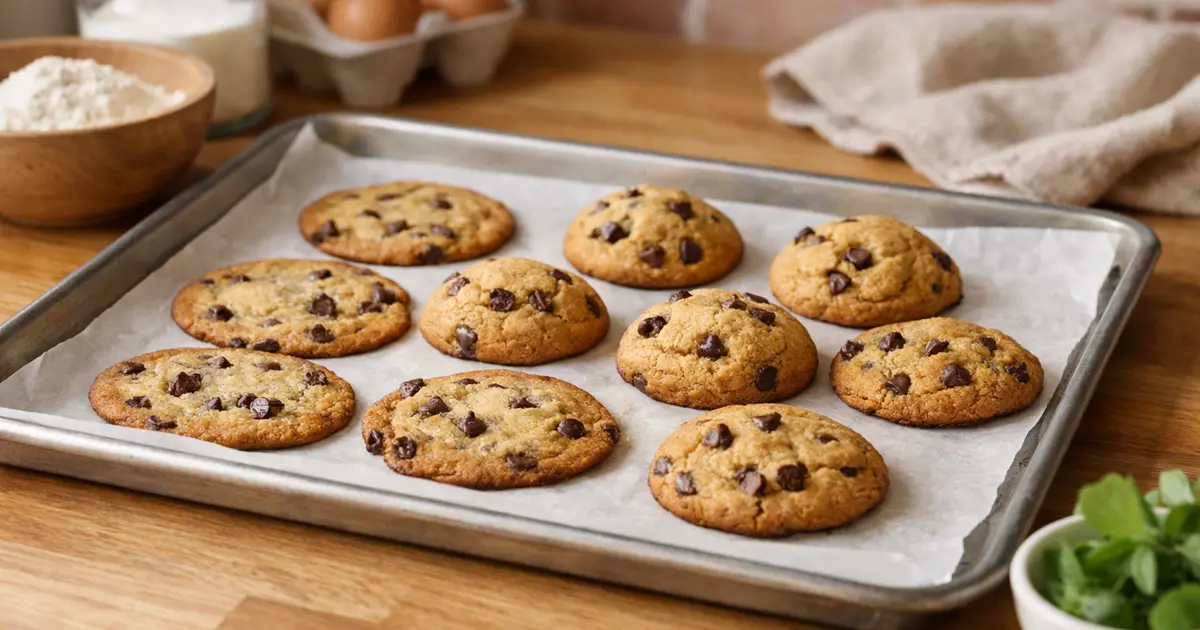
Choose what is wrong with the tray of cookies, then answer a follow-up question about the dough and the oven. Each result explains the cause and gives the change to make next time.
What is wrong with the cookies?
They spread flat, thin or into each other
Do you bake at high altitude?
Extension sources treat 3,000 feet and higher as the point where recipes may need changes.
Yes, I bake above 3,000 feet
Keep an eye on it
Spreading at altitude: sugar and fat concentrate and weaken the dough
The University of Arizona explains that at altitude liquids evaporate faster, so sugars and fats become more concentrated, weaken the structure and make cookies spread thin. Colorado State adds that many cookie recipes hold more sugar and fat than they need, even at low elevation.
What to do
- Change one thing per batch. Colorado State suggests a slight decrease in the fat or sugar, or a slight increase in the flour and liquid.
- Try a slight increase in the baking temperature, and a slight decrease in the baking powder or soda.
- Bake a single test cookie before the full tray, as the University of Arkansas advises.
- Write down what you changed so the next batch builds on the last one.
No, I bake at a lower elevation
Which of these fits how the cookies were made?
The dough was soft or warm, or the butter was very soft
Keep an eye on it
The dough was too soft: chill it, and do not over-soften the fat
The University of Arkansas says cookies spread for a variety of reasons and that dough which spreads too much may simply be too soft. Over-softened butter or margarine is a common cause. Kansas State lists dough that is too soft from too much liquid among its causes of excessive spread.
What to do
- Chill the dough, then bake a test cookie before the whole batch.
- If the dough is still too soft, stir in one to two tablespoons of flour.
- Soften butter only until it gives slightly. Do not let it turn greasy or melt.
- Measure the liquid carefully, since extra liquid makes a slack dough.
I used a different fat than the recipe names, or a reduced-fat spread
Keep an eye on it
A different fat: butter spreads more than shortening
The University of Illinois explains that butter and margarine tend to make thinner, crispier cookies than shortening because they melt at a lower temperature and hold a little water. The University of Nebraska adds that reduced-fat margarines carry added water and cannot be used for baking.
What to do
- Use the fat the recipe names. If you swap shortening for butter, expect a flatter, crisper cookie.
- Skip tub or reduced-fat spreads for cookie dough, and do not use whipped butter in place of regular butter.
- Chill dough made with butter before it goes into the oven.
- NDSU notes that when shortening replaces butter, you add the water amount named on the package.
I put dough on a hot pan, or crowded the cookies together
Keep an eye on it
A hot pan or crowded tray made the cookies run together
Kansas State lists cookies placed too close together and dough placed on a hot baking sheet among the causes of excessive spread. Heat starts melting the fat before the cookie has set. NDSU suggests baking one pan at a time on the center rack and letting the pan cool between batches.
What to do
- Leave room between the dough balls for the cookies to spread.
- Let the pan cool between batches, or rotate in a second cool pan.
- Bake one pan at a time on the center rack.
They are puffy and cakey instead of chewy
Keep an eye on it
Puffy, cakey cookies: too much flour, extra leavening or a firm fat
Kansas State says that too much flour makes cookies dry and cracked, and NDSU says to spoon the flour into the cup and level it because scooping packs in extra. Extra leavening adds lift, and baking soda has four times the power of baking powder. The University of Illinois notes that shortening melts later than butter, which is why cookies made with butter spread more.
What to do
- Spoon the flour into the cup and level it with a knife instead of scooping.
- Measure baking soda and powder with level measuring spoons.
- Use butter if the recipe names it. Shortening gives a thicker cookie.
- Do not overmix. NDSU says gluten builds with mixing and toughens cookies.
They are hard, dry or crumbly
What best describes how the dough was made and baked?
I scooped the flour or mixed the dough until very smooth
Keep an eye on it
Too much flour or too much mixing made the cookies hard
Kansas State says that adding too much flour causes dry, flinty, cracked cookies. The University of Arkansas lists overmixed dough among the causes of hard, crumbly cookies and says to stop mixing as soon as the ingredients come together. NDSU explains that gluten develops with mixing.
What to do
- Spoon flour into the cup and level it, instead of scooping.
- Stop mixing as soon as the ingredients come together.
- When rolling dough, dust the board lightly, since flour worked in while rolling counts toward the total.
I baked them until they looked firm or dry
Keep an eye on it
Baked too long: pull them while the edges are light brown
The University of Arkansas lists overbaking among the causes of hard, dry cookies, and its sugar cookie recipe bakes only until the edges are light brown. Kansas State lists overbaked dough among the causes of dry or crumbly cookies.
What to do
- Start checking early and take the tray out when the edges turn light brown.
- Check the oven with a thermometer, since an oven that runs hot dries cookies out.
- Let cookies firm up on the pan for a few minutes before moving them to a rack.
I cut the fat, or added salt without leveling the spoon
Keep an eye on it
Not enough fat, too much salt or too little liquid
The University of Arkansas says crumbling cookies can come from not enough fat, a dough that was overly wet, or too much salt, and tells bakers to level the salt in the measuring spoon. Kansas State adds wrong proportions, poor measuring and not enough liquid to the list.
What to do
- Measure fat and salt exactly, and level the spoon.
- If you cut the fat, expect a firmer, drier cookie. Make that change in small steps.
- Use the fat in the form the recipe names.
They are pale or too dark
Are the cookies pale or too dark?
Pale, or doughy in the middle
Keep an eye on it
Pale or doughy cookies: underbaked or an oven that runs cool
Kansas State lists a doughy, raw flavor as a sign of underbaked cookies. Oregon State advises testing the oven with a thermometer before baking, because the dial may not match the real temperature. At altitude, Colorado State suggests a slight increase in baking temperature for cookies.
What to do
- Check the oven temperature with a thermometer.
- Leave the cookies in until the edges turn light brown, as the University of Arkansas describes.
- A very light pan reflects heat. If the bottoms stay pale, try the middle rack and a slightly longer bake.
Too dark, or burnt on the bottoms
Keep an eye on it
Over-browned: a dark pan, the wrong rack or a hot oven
The University of Arkansas says the baking sheet may be the culprit. The darker the pan, the more heat it absorbs and gives off. It recommends a thin, light cookie sheet, the middle rack and close watching. Kansas State lists dark cookie sheets, a sheet not centered in the oven, and a too-hot oven.
What to do
- Switch to a thin, light-colored cookie sheet.
- Bake on the middle rack and keep a close eye on the tray.
- Check the oven with a thermometer, and let the pan cool between batches.
They taste bitter or soapy
Keep an eye on it
A bitter or soapy taste: too much baking soda for the acid
NDSU warns that a heaping teaspoon of baking soda does no good and can make cookies bitter or soapy. Baking soda needs an acidic ingredient, such as brown sugar, molasses, chocolate, honey or sour cream, to make gas. It also has four times the leavening power of baking powder.
What to do
- Level the measuring spoon every time.
- Do not swap baking powder for baking soda one for one. NDSU says you cannot trade them.
- Check the recipe for an acidic ingredient to go with the soda.
What this tool does
Cookies look simple, which is why a bad tray feels so confusing. The same dough can spread into one sheet, bake up as a puffy pillow or dry out to a crumbly brick, depending on small differences in how it was measured, mixed, chilled and baked. This troubleshooter lets you start from what you see on the pan and works backward to what probably happened. You pick the symptom, answer a short question about the dough or the baking, and get a plain explanation with the changes to make next time.
The answers come from university extension sources: a cookie-fixing column, judges guides that list faults with their causes, fat and leavening guides, and altitude baking guides. Where a fix means changing an ingredient, the results point to the substitution pages, and they warn you that a swap changes the cookie.
The usual suspects
Cookie dough is mostly flour, fat, sugar and a little liquid, so most problems trace back to the balance between them. Extra flour makes dry, flinty cookies. Too little fat or too much liquid changes how the dough holds together. Butter and margarine melt at a lower temperature than shortening and carry a little water, so they give thinner, crisper cookies, as the University of Illinois explains. Reduced-fat spreads hold more water and are not meant for baking.
Handling matters just as much. The University of Arkansas advises baking a single test cookie before the whole tray, because it tells you how the dough will behave. If it spreads too much, chill the dough. If that is not enough, stir in one to two tablespoons of flour. Do not over-soften the butter. Mixing past the point where the ingredients come together toughens cookies, because gluten develops with every stir.
Leavening has its own trap. NDSU warns that baking soda is four times as strong as baking powder, and that a heaping spoon can leave a bitter or soapy taste. Pans and ovens add more variables. A dark pan absorbs and radiates more heat, so the bottoms burn while the tops stay pale. A hot pan makes the dough melt before it sets.
Baking in the mountains
Above 3,000 feet, liquids evaporate faster, so sugar and fat become more concentrated and weaken the dough. That is why cookies spread thin up high. Colorado State suggests trying a slight increase in the baking temperature, a slight cut in the leavening, a slight cut in the fat or sugar, or a slight increase in the flour and liquid. The University of Arizona stresses changing only one thing at a time.
How to use the tool
Choose the main complaint, then answer the follow-up. For spreading, the tool asks about altitude, the dough temperature, the fat and the pan. For hard cookies, it asks about measuring, baking time and salt. Make one change for the next batch and keep a note of it.
Worked example
A baker makes drop cookies with butter on a warm afternoon. They run together into a thin lace. She chooses "They spread flat, thin or into each other," says she is at a low elevation, and picks "The dough was soft or warm." The result recommends chilling, a test cookie, and a spoonful of flour if needed. She chills the dough, bakes one cookie on a cool pan, and finds it holds its shape. The rest of the batch follows.
When to start over
If dough contains raw eggs, do not eat it to check the flavor. Cookies that were baked until burnt cannot be rescued, but you can try the next tray with a lighter pan. If your trouble is a loaf or a cake, use the bread troubleshooter or the cake baking troubleshooter. For safe egg handling, read the egg storage and safety guide.
Sources
- University of Arkansas Cooperative Extension, Fixing less-than-perfect holiday cookies uaex.uada.edu
- Kansas State University Research and Extension, Judges guide for foods and nutrition exhibits (4H488) bookstore.ksre.ksu.edu
- Colorado State University Extension, High altitude food preparation guide routt.extension.colostate.edu
- University of Arizona Cooperative Extension, The science of high-elevation baking extension.arizona.edu
- University of Illinois Extension, Functions of fats in the kitchen extension.illinois.edu
- University of Nebraska–Lincoln Extension, Fats in baking (G2187) extensionpubs.unl.edu
- NDSU Extension, Prairie Fare: Add to the levity of baking with these tips ag.ndsu.edu
- Oregon State University Extension, 4-H foods: cakes ir.library.oregonstate.edu